
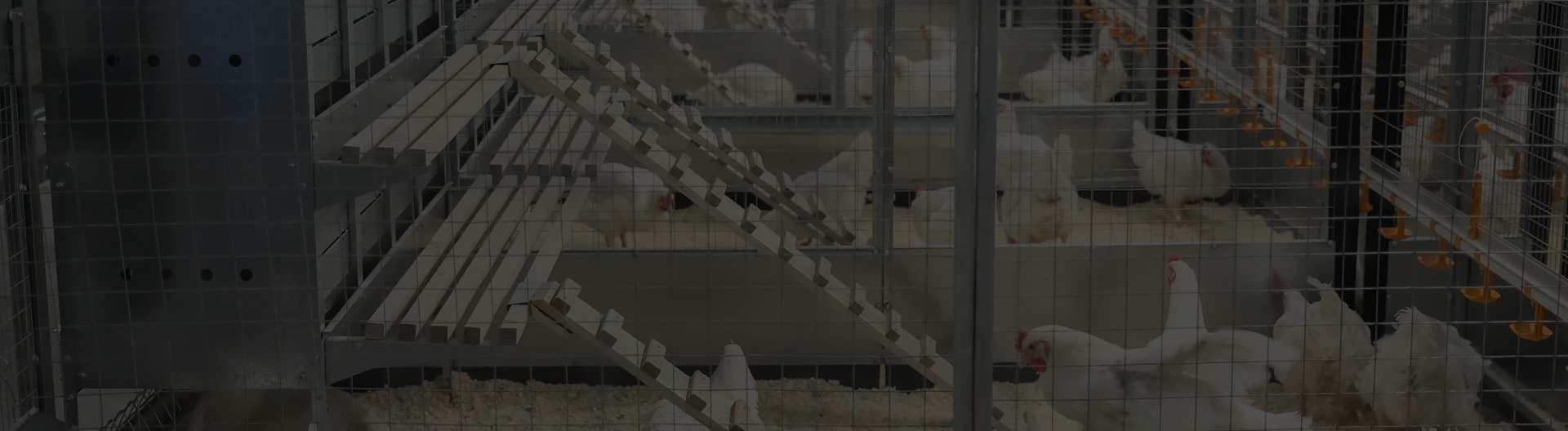
How to Install Your Chicken Layer Cage for Poultry System
Dec . 11, 2025 15:10 Back to list
How to Install Your Chicken Layer Cage for Poultry System
Installing a high-quality layer chicken cages for sale system is a critical step for modern poultry farming success. A properly assembled cage structure ensures the longevity of your investment, the safety and comfort of your birds, and the efficiency of egg collection and waste management.
Essential Preparation and Toolkit for Assembling Wire Cages for Chickens
Before beginning the installation, proper preparation is key. A clean, well-designed poultry house—preferably one utilizing the free design consultation from the manufacturer—will make the assembly process much smoother. Ensure you have the following tools and materials ready:
Required Tools:
Pliers and wire cutters
Hog ring pliers and ample hog rings (for securing mesh panels)
Measuring tape
Wrench set (for attaching frames and supports)
Level (to ensure the structure is stable)
Safety gloves and eyewear
Component Check:
Unpack all crates and verify that you have all the necessary components as listed in your manifest. These typically include:
Front Mesh: Panels with feeding troughs and doors.
Bottom Mesh: Sloped floor panels for egg rolling.
Back Mesh: Vertical rear panels.
Top Mesh: Roof panels.
Partition Mesh: Side separation panels.
Support frames, legs, water pipes, feeding troughs, and egg collection trays.
Chicken Cage Installation Step 1: Completing the Foundational Connection of Bottom Mesh & Front Mesh
The first step establishes the fundamental structure of the entire cage row. This stage focuses on the base and the front access of your chicken poultry cage.
Establishing the Frame and Base
Set Up the Support Legs: Install the heavy-duty support frames/legs in their designated positions according to the layout plan. Use a level to ensure the entire row of legs is perfectly vertical and aligned. This is crucial for stability and proper egg roll-out.
Attach the Bottom Mesh: The Bottom Mesh panels form the floor of the cage where the hens stand, and are critically designed with a slight slope for automatic egg collection.
Place the sloped Bottom Mesh onto the support frame.
Secure the mesh to the frame using bolts or the recommended hog rings. Ensure the slope is correctly oriented to guide eggs toward the front collection area.
Connect the Front Mesh: Next, attach the Front Mesh panel, which includes the access doors and the groove for the feeding trough, to the front edge of the Bottom Mesh.
Use hog rings to tightly secure the bottom edge of the Front Mesh to the corresponding edge of the Bottom Mesh. This creates a secure, closed front structure.
Pro-Tip: A secure connection here prevents chickens from escaping or eggs from dropping into the waste pit prematurely.
Chicken Cage Installation Step 2: Installing the Partition Mesh for Individual Cages
With the base and front established, the next critical step is creating the individual living spaces for the birds. This involves installing the Partition Mesh.
Creating Cage Compartments
Placement: The Partition Mesh panels serve as the side walls that separate the chicken colony into manageable groups, defining the dimensions of each cage unit.
Securing: Carefully position the Partition Mesh panel vertically and perpendicular to the Front and Bottom Mesh.
Use hog rings to secure the front edge of the Partition Mesh to the vertical wire of the Front Mesh.
Secure the bottom edge of the Partition Mesh to the wire of the Bottom Mesh.
Consistency: Repeat this process for all necessary partition walls along the entire length of the cage row. Maintaining consistent spacing is essential to ensure that the subsequent installation of the back and top mesh panels fits perfectly. The precision of these wire cages for chickens is dependent on the accuracy of the partition placement.
Chicken Cage Installation Step 3: Installing the Back Mesh for Enclosure and Support
The third step provides the rear enclosure and adds significant structural rigidity to the entire chicken layer cage for poultry system.
Adding the Rear Panel
Positioning: Take the Back Mesh panel and position it vertically at the rear of the cage row. This panel must align perfectly with the back edges of the Bottom Mesh and the vertical edges of the Partition Mesh panels.
Securing Connections:
Begin by securing the bottom edge of the Back Mesh to the rear edge of the Bottom Mesh.
Systematically secure the Back Mesh to the rear vertical edges of every installed Partition Mesh panel. These connections are vital for the overall strength and stability of the assembled cage.
Lateral Support: Ensure the Back Mesh is pulled taut and properly secured. In large multi-tier systems, the Back Mesh often provides points for additional lateral support bars, further stabilizing the long cage structure.
Chicken Cage Installation Step 4: Completing Installation of All the Mesh and Ancillary Systems
The final step involves installing the remaining mesh panels—typically the Top Mesh—and integrating the essential support systems for feeding and watering, thus completing the setup of your layer chicken cages for sale.
Finalizing the Cage Structure
Install the Top Mesh: Place the Top Mesh panels over the structure, resting on the tops of the Front, Back, and Partition Mesh walls.
Secure the Top Mesh to the top horizontal wires of the Front and Back Mesh panels and the top edges of the Partition Mesh panels using hog rings. This locks the entire structure into a solid, robust unit.
Integrate Ancillary Systems: Now that the cage structure is complete, you can install the remaining functional components of the chicken poultry cage:
Feeding Troughs: Hang or attach the feeding troughs onto the Front Mesh. Ensure they are secured and at an appropriate height for the birds.
Watering System: Install the PVC water pipes and nipple drinkers above the cages. Use the provided connectors to ensure a leak-free system. Properly secure the pipes to the cage structure.
Egg Collection: Assemble and install the egg collection tray/trough along the front, ensuring the eggs roll safely into it without cracking.
Manure Removal: If applicable, install the manure belt or scraper system beneath the cages.
Wire Cages for Chickens: Final Inspection and Safety Check
Check all connections: Walk the entire length of the cage row and double-check every hog ring and bolt to ensure the structure is absolutely secure and stable.
Test the slope: Verify that the slope of the Bottom Mesh is sufficient for eggs to roll out smoothly.
Remove hazards: Check for any sharp edges or loose wires that could injure the birds or the workers.
By meticulously following these four steps, you will have successfully installed your new wire cages for chickens. The integrity of the structure will ensure optimal performance and bird welfare for years to come.
As a reminder, Anping County Yize Metal Products Co., Ltd. is committed to your success, offering:
Installation video and instructions (for visual assistance on complex steps)
Free chicken cage layout and house design (to ensure the system fits your facility perfectly)
-
Professional Mini Poultry Cage for Efficient Small Scale Farming
NewsApr.16,2026
-
Optimizing Poultry Production with Advanced Cage System Poultry
NewsApr.09,2026
-
Optimizing Layer Poultry Cages for Efficient and Profitable Egg Production
NewsApr.07,2026
-
Comprehensive Guide to Poultry Cages for Layers and Modern Farming Solutions
NewsApr.04,2026
-
Comprehensive Guide to Optimizing Poultry Laying Cages for Egg Production
NewsMar.31,2026
-
Maximize Egg Production with Efficient Poultry Layer Cage Systems
NewsMar.28,2026





 Afrikaans
 Albanian
 Amharic
 Arabic
 Armenian
 Azerbaijani
 Basque
 Belarusian
 Bengali
 Bosnian
 Bulgarian
 Catalan
 Cebuano
 Corsican
 Croatian
 Czech
Czech
 Danish
 Dutch
Dutch
 Esperanto
 Estonian
 Finnish
 French
 Frisian
 Galician
 Georgian
 German
 Greek
Greek
 Gujarati
 Haitian Creole
 Hausa
Hausa
 Hawaiian
 Hebrew
 Hindi
Hindi
 Miao
Miao
 Hungarian
 Icelandic
 Igbo
Igbo
 Indonesian
 Irish
Irish
 Italian
 Japanese
 Javanese
 Kannada
 Kazakh
 Khmer
Khmer
 Rwandese
 Korean
 Kurdish
 Kyrgyz
 Lao
Lao
 Latin
Latin
 Latvian
 Lithuanian
 Luxembourgish
 Macedonian
 Malgashi
 Malay
Malay
 Malayalam
 Maltese
 Maori
Maori
 Marathi
 Mongolian
 Myanmar
 Nepali
 Norwegian
 Norwegian
 Occitan
 Pashto
 Persian
 Polish
 Portuguese
 Punjabi
 Romanian
 Russian
 Samoan
 Scottish Gaelic
 Serbian
 Sesotho
 Shona
Shona
 Sindhi
 Sinhala
 Slovak
 Slovenian
 Somali
 Spanish
 Sundanese
 Swahili
 Swedish
 Tagalog
 Tajik
Tajik
 Tamil
Tamil
 Tatar
Tatar
 Telugu
 Thai
Thai
 Turkish
 Turkmen
 Ukrainian
 Urdu
Urdu
 Uighur
 Uzbek
Uzbek
 Vietnamese
 Welsh
Welsh
 Bantu
Bantu
 Yiddish
 Yoruba
 English