
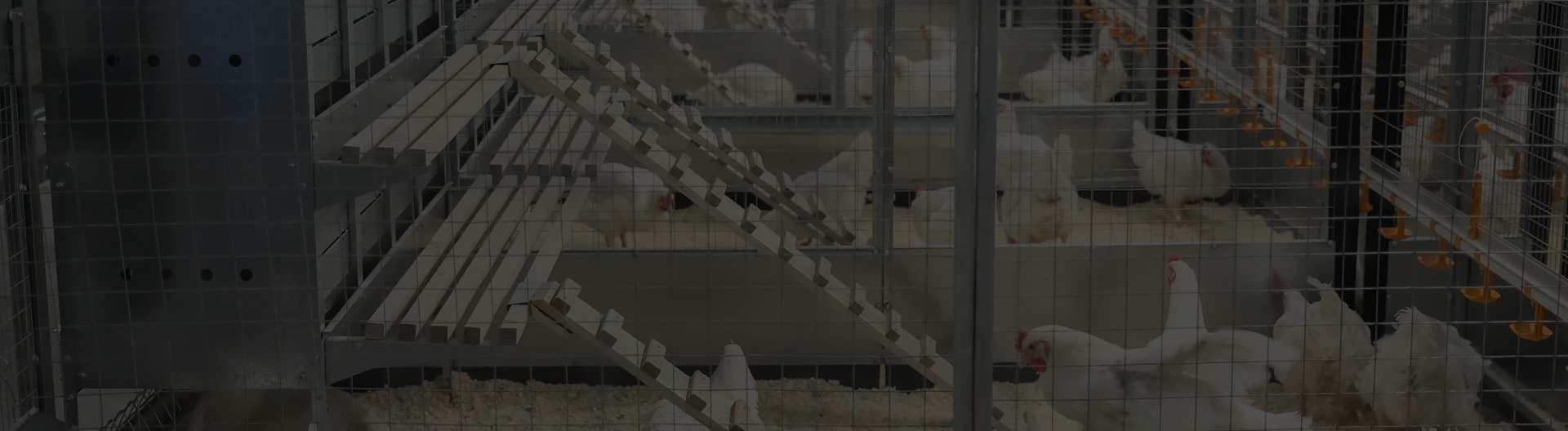
Optimizing Poultry Production with Advanced Cage System Poultry
Apr . 09, 2026 01:55 Back to list
Optimizing Poultry Production with Advanced Cage System Poultry
Optimizing Poultry Production with an Advanced Cage System Poultry
In the modern agricultural landscape, maximizing efficiency while maintaining bird health is the primary goal for every farm manager. Implementing a professional cage system poultry is one of the most effective ways to achieve high-density production without compromising on sanitation or resource management. These systems are engineered to streamline feeding, watering, and waste removal, allowing farmers to scale their operations rapidly. By shifting from traditional floor-raising to an automated cage environment, producers can significantly reduce labor costs and minimize the risk of disease transmission. In this guide, we will explore how the right equipment transforms poultry farming into a high-precision business.
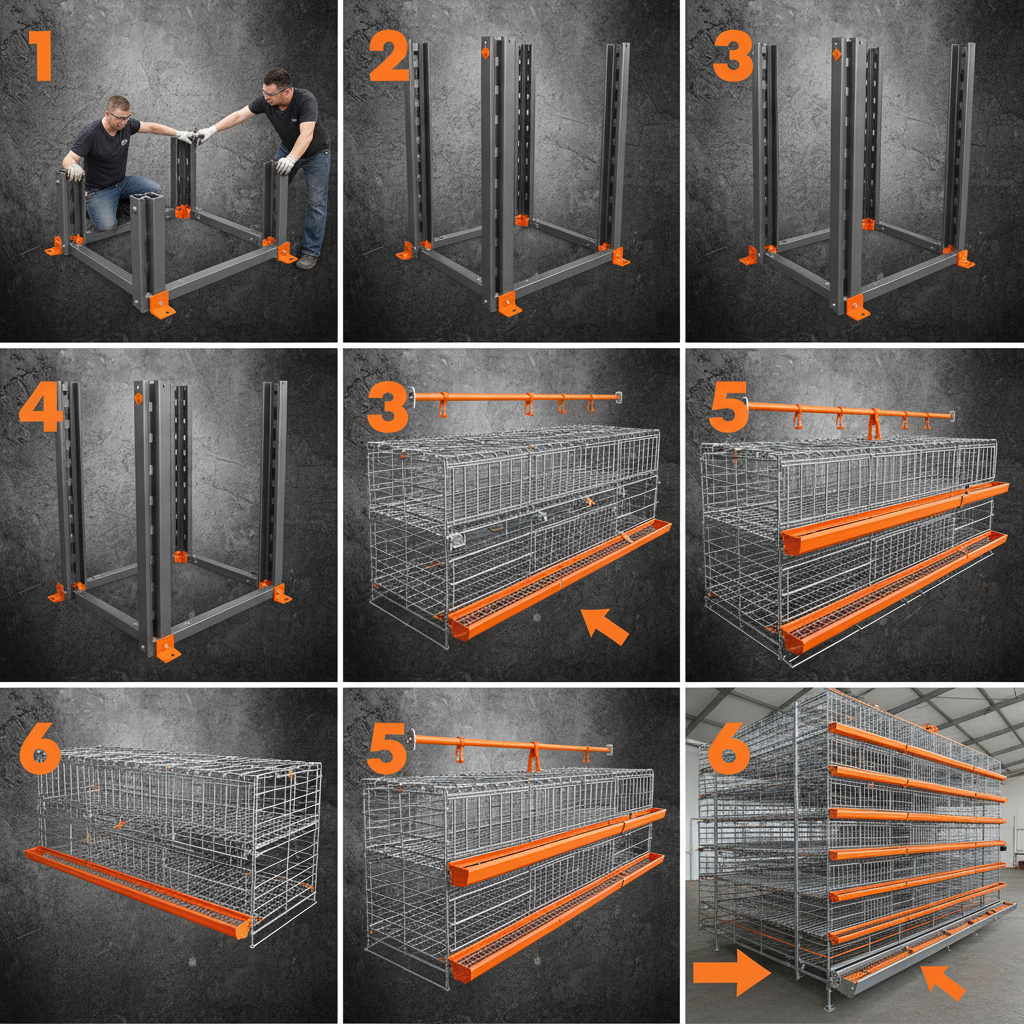
The Core Advantages of a Modern Cage System Poultry
A high-quality cage system poultry setup offers unparalleled control over the environment. Unlike free-range systems, cages prevent birds from coming into direct contact with their droppings, which drastically lowers the incidence of coccidiosis and other parasitic infections. Furthermore, the vertical stacking capability allows farmers to utilize vertical space, effectively increasing the bird capacity per square meter of land. This spatial efficiency is critical for urban or semi-urban farms where land is at a premium. Modern cages are also designed with ergonomic slopes that ensure eggs roll gently into collection trays, reducing breakage and labor intensive manual gathering.
Key Benefits: Enhanced bio-security, optimized feed conversion ratios (FCR), reduced manual labor through automation, and significantly higher egg collection efficiency.
Automation Integration in Poultry Caging
Automation is the heartbeat of a successful cage system poultry. From automated feeding lines that deliver precise portions of nutrients to nipple drinking systems that provide a constant supply of clean water, technology eliminates human error. Automated manure removal belts are perhaps the most critical component, ensuring that ammonia levels remain low, which protects the respiratory health of the birds. When these systems are integrated, the farm becomes a synchronized machine where the manager focuses on data and health monitoring rather than repetitive physical toil.
Comparing Cage System Poultry vs. Floor Raising
When deciding between a cage system poultry and traditional floor raising, the difference in productivity is stark. Floor systems often suffer from higher feed waste and a higher risk of cannibalism due to overcrowding. In contrast, cage systems provide a structured environment where every bird has guaranteed access to food and water. While the initial investment for cages is higher, the return on investment (ROI) is realized through lower mortality rates and higher egg yields.
Health and Welfare in a Cage System Poultry
A common misconception is that cages compromise bird welfare. However, a scientifically designed cage system poultry actually protects birds from bullying and aggression often found in flock environments. By controlling the temperature, humidity, and ventilation within the house, farmers can prevent heat stress—a leading cause of mortality in poultry. Modern cage designs include sufficient space and high-quality materials that prevent foot injuries, ensuring that the birds remain healthy and productive throughout their lifecycle.
Technical Specifications for Cage System Poultry
Choosing the right equipment requires a deep dive into technical specifications. A professional cage system poultry is typically constructed from hot-dipped galvanized steel to prevent corrosion caused by ammonia. The feeding troughs are designed to minimize spillage, and the watering nipples are leak-proof to keep the bedding dry. Below are the standard technical specifications for a commercial-grade layering system:
Conclusion: Scaling Your Farm with the Right Cage System Poultry
Investing in a professional cage system poultry is a strategic move for any farmer aiming for industrial-scale efficiency. By combining spatial optimization, disease control, and labor-saving automation, these systems ensure a stable and profitable production cycle. Whether you are focusing on egg production or broiler growth, the precision offered by automated caging systems is the key to staying competitive in the global market. Choose quality, prioritize automation, and watch your poultry business thrive.
Frequently Asked Questions (FAQs)
How does a cage system poultry improve egg quality?
A cage system improves egg quality primarily by ensuring cleanliness and reducing breakage. In floor systems, eggs often get soiled by litter or cracked by the birds themselves. In an automated cage system, eggs roll onto a collection belt almost immediately after being laid. This keeps the shells clean, reducing the need for washing and decreasing the risk of bacterial contamination. Furthermore, the controlled nutrition provided by automated feeders ensures the hens receive the exact minerals needed for strong, high-quality shells.
Is the initial cost of an automated cage system worth the investment?
Yes, although the upfront cost is higher than traditional methods, the long-term ROI is significantly better. You save on labor costs because feeding and cleaning are automated. You also see a decrease in feed waste and a reduction in mortality rates due to better hygiene. Most commercial farmers find that the increase in yield and decrease in operational overhead allow the system to pay for itself within a few production cycles. When looking at the scale of production, the efficiency of a cage system poultry is unmatched.
How do I maintain a galvanized cage system to prevent rust?
Maintenance starts with choosing high-quality hot-dipped galvanized steel, which provides a thick protective zinc layer. To maintain the system, it is essential to ensure proper ventilation in the poultry house to reduce the concentration of ammonia gas, which can be corrosive over time. Regular inspections of the manure belts and watering nipples are recommended to prevent leaks that could lead to localized rusting. Using the professional equipment from Yize Machine ensures you have the most durable materials designed for harsh farm environments.
Can these systems be customized for different poultry breeds?
Absolutely. A professional cage system is typically modular, meaning the dimensions of the cages, the height of the tiers, and the type of feeding troughs can be adjusted based on whether you are raising layers, broilers, or breeders. Different breeds have different space requirements and nutritional needs, and a customizable system allows the farmer to optimize the environment for the specific growth rate and size of the bird, ensuring maximum comfort and productivity.
-
Professional Mini Poultry Cage for Efficient Small Scale Farming
NewsApr.16,2026
-
Optimizing Poultry Production with Advanced Cage System Poultry
NewsApr.09,2026
-
Optimizing Layer Poultry Cages for Efficient and Profitable Egg Production
NewsApr.07,2026
-
Comprehensive Guide to Poultry Cages for Layers and Modern Farming Solutions
NewsApr.04,2026
-
Comprehensive Guide to Optimizing Poultry Laying Cages for Egg Production
NewsMar.31,2026
-
Maximize Egg Production with Efficient Poultry Layer Cage Systems
NewsMar.28,2026





 Afrikaans
 Albanian
 Amharic
 Arabic
 Armenian
 Azerbaijani
 Basque
 Belarusian
 Bengali
 Bosnian
 Bulgarian
 Catalan
 Cebuano
 Corsican
 Croatian
 Czech
Czech
 Danish
 Dutch
Dutch
 Esperanto
 Estonian
 Finnish
 French
 Frisian
 Galician
 Georgian
 German
 Greek
Greek
 Gujarati
 Haitian Creole
 Hausa
Hausa
 Hawaiian
 Hebrew
 Hindi
Hindi
 Miao
Miao
 Hungarian
 Icelandic
 Igbo
Igbo
 Indonesian
 Irish
Irish
 Italian
 Japanese
 Javanese
 Kannada
 Kazakh
 Khmer
Khmer
 Rwandese
 Korean
 Kurdish
 Kyrgyz
 Lao
Lao
 Latin
Latin
 Latvian
 Lithuanian
 Luxembourgish
 Macedonian
 Malgashi
 Malay
Malay
 Malayalam
 Maltese
 Maori
Maori
 Marathi
 Mongolian
 Myanmar
 Nepali
 Norwegian
 Norwegian
 Occitan
 Pashto
 Persian
 Polish
 Portuguese
 Punjabi
 Romanian
 Russian
 Samoan
 Scottish Gaelic
 Serbian
 Sesotho
 Shona
Shona
 Sindhi
 Sinhala
 Slovak
 Slovenian
 Somali
 Spanish
 Sundanese
 Swahili
 Swedish
 Tagalog
 Tajik
Tajik
 Tamil
Tamil
 Tatar
Tatar
 Telugu
 Thai
Thai
 Turkish
 Turkmen
 Ukrainian
 Urdu
Urdu
 Uighur
 Uzbek
Uzbek
 Vietnamese
 Welsh
Welsh
 Bantu
Bantu
 Yiddish
 Yoruba
 English