
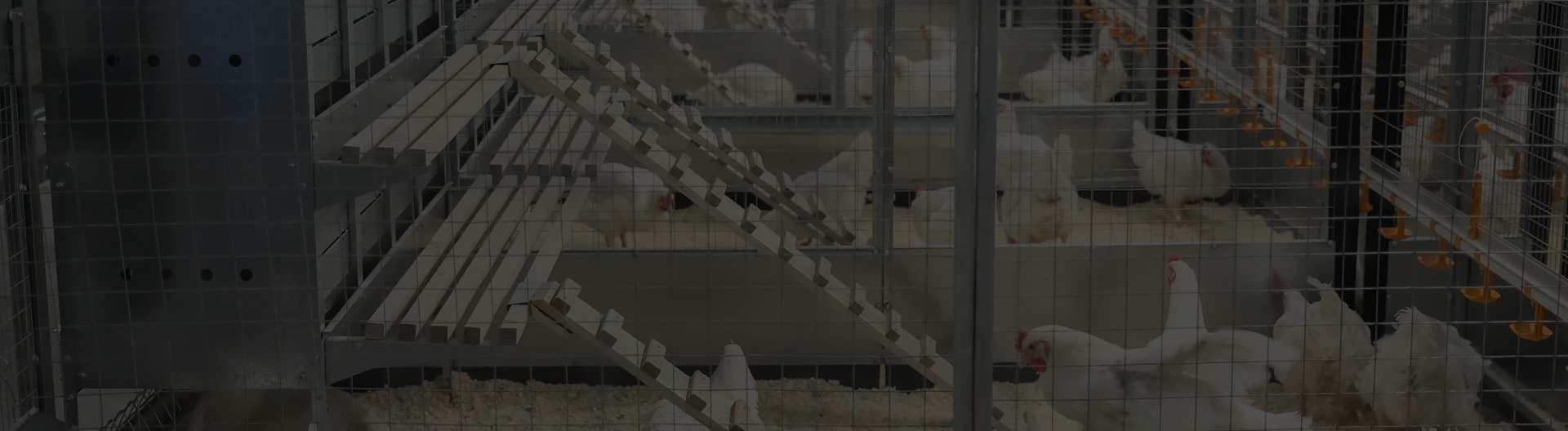
How to Improve Egg Production with Layer Chicken Cages
Dec . 25, 2025 14:51 Back to list
How to Improve Egg Production with Layer Chicken Cages
The global poultry industry is under constant pressure to increase output while maintaining high standards of bird health and resource efficiency. As egg consumption continues to rise, farmers are looking for ways to optimize their operations. One of the most effective methods to achieve consistent results is the transition from floor-based rearing to caged systems.
Modern layers chicken cages are engineered to provide a controlled environment that minimizes stress, optimizes nutrition, and maximizes egg yield.
Optimizing Space and Management with Poultry Cages for Layer Chickens
The primary challenge in commercial egg production is the efficient use of space. Traditional free-range or deep-litter systems require vast amounts of land and are often difficult to manage at scale. The introduction of poultry cages for layer chickens has allowed farmers to stack tiers vertically, drastically increasing the number of birds that can be housed within a single building footprint.
Increased Stocking Density
By using vertical systems, farmers can house significantly more birds per square meter without compromising the air quality or comfort of the flock. This intensive management style ensures that environmental factors like temperature, humidity, and ventilation are uniform for every bird, which is essential for consistent egg-laying cycles.
Simplified Health Monitoring
In a floor-based system, identifying a sick or underperforming hen is like finding a needle in a haystack. With poultry cages for layer chickens, each bird or small group of birds is easily visible. This allows farm staff to quickly identify individual health issues, monitor feed intake, and intervene before a minor illness becomes a flock-wide outbreak.
Reducing Waste and Stress through Advanced Layers Chicken Cages
Stress is the ultimate enemy of egg production. When hens are stressed—whether by social hierarchy battles, predator threats, or uneven temperatures—their bodies divert energy away from egg production and toward survival mechanisms. Layers chicken cages are designed specifically to eliminate these stressors.
Feed and Water Efficiency
One of the most significant benefits of using layers chicken cages is the reduction in feed wastage. In floor systems, hens often scratch at their feed, leading to significant loss and contamination. Modern cage systems feature precisely positioned feed troughs and nipple drinkers that prevent spilling and ensure every bird has equal access to high-quality nutrition. This "equal access" prevents the dominant-bird behavior seen in open barns, ensuring that even the less aggressive hens maintain a high laying rate.
Behavioral Stability
By housing birds in smaller, stable groups, the "pecking order" is established quickly and remains stable. This social harmony reduces physical injury and energy expenditure, allowing the hen to focus her metabolic resources on the formation of high-quality eggs.
Enhancing Egg Quality with the Layer Egg Chicken Cage
For a commercial poultry farmer, the quantity of eggs is only half the battle; the quality and cleanliness of the eggs determine the final market value. The design of a modern layer egg chicken cage is centered around the safe transit of the egg from the hen to the collection belt.
Automated Collection and Cleanliness
In a layer egg chicken cage, the floor is typically sloped at a precise angle (usually between 7° and 9°). When a hen lays an egg, it immediately rolls away from the bird and onto an automated collection belt. This provides several advantages:
Reduced Breakage: Eggs do not sit under the hens where they could be stepped on or pecked.
Cleanliness: Because the egg is removed from the bird’s environment immediately, it does not come into contact with manure or feathers. This significantly reduces the risk of Salmonella contamination and the need for intensive washing, which can weaken the eggshell’s natural protective cuticle.
Real-time Data: Automated systems linked to these cages can track egg counts per tier or per row, allowing for data-driven decisions regarding flock management.
The Precision Engineering of the Layer Chicken Battery Cage
The term layer chicken battery cage refers to the tiered, modular structure that characterizes modern industrial egg production. These systems represent the pinnacle of poultry engineering, integrating feeding, watering, egg collection, and waste removal into a single, seamless machine.
Automated Manure Management
A critical feature of the layer chicken battery cage is the manure belt system located beneath each tier. As discussed in previous agricultural contexts, removing waste frequently is vital for respiratory health. By keeping the manure separate from the birds, the ammonia levels remain low. Clean air translates to healthier lungs and more vigorous hens, which directly correlates to a longer and more productive laying life.
Climate Control Integration
Battery systems are designed to work in tandem with tunnel ventilation and evaporative cooling pads. Because the birds are spaced evenly in rows of layer chicken battery cages, air can flow around every hen consistently. This prevents "hot spots" in the barn that often cause heat stress during summer months—a primary cause of egg production drops in tropical or temperate climates.
Longevity and ROI in Modern Caging Systems
Investing in high-quality caging is a long-term strategy for farm profitability. While the initial capital expenditure for a layer egg chicken cage system is higher than for a simple floor barn, the Return on Investment (ROI) is realized through several channels:
Lower Labor Costs: Automation in feeding and egg collection reduces the need for a large workforce.
Reduced Medication Costs: Better hygiene and separation from waste lead to fewer infections and lower veterinary bills.
Higher Feed Conversion Ratio (FCR): When birds move less and are kept at an ideal temperature, they require less feed to produce a single egg.
Furthermore, the durability of modern materials—such as hot-dipped galvanized steel—ensures that layers chicken cages can last for decades, providing a stable foundation for multiple generations of flocks.
Improving egg production is not about pushing the birds beyond their biological limits; it is about providing the perfect environment for them to reach their natural potential. The use of poultry cages for layer chickens provides the control, hygiene, and efficiency required to thrive in the modern agricultural landscape.
By choosing the right layer chicken battery cage configuration, farmers can ensure that their hens are healthy, their eggs are clean, and their operations are profitable. Whether you are looking at a layer egg chicken cage for its collection efficiency or layers chicken cages for their management ease, the transition to caged systems is a proven path toward agricultural excellence.
-
Professional Mini Poultry Cage for Efficient Small Scale Farming
NewsApr.16,2026
-
Optimizing Poultry Production with Advanced Cage System Poultry
NewsApr.09,2026
-
Optimizing Layer Poultry Cages for Efficient and Profitable Egg Production
NewsApr.07,2026
-
Comprehensive Guide to Poultry Cages for Layers and Modern Farming Solutions
NewsApr.04,2026
-
Comprehensive Guide to Optimizing Poultry Laying Cages for Egg Production
NewsMar.31,2026
-
Maximize Egg Production with Efficient Poultry Layer Cage Systems
NewsMar.28,2026





 Afrikaans
 Albanian
 Amharic
 Arabic
 Armenian
 Azerbaijani
 Basque
 Belarusian
 Bengali
 Bosnian
 Bulgarian
 Catalan
 Cebuano
 Corsican
 Croatian
 Czech
Czech
 Danish
 Dutch
Dutch
 Esperanto
 Estonian
 Finnish
 French
 Frisian
 Galician
 Georgian
 German
 Greek
Greek
 Gujarati
 Haitian Creole
 Hausa
Hausa
 Hawaiian
 Hebrew
 Hindi
Hindi
 Miao
Miao
 Hungarian
 Icelandic
 Igbo
Igbo
 Indonesian
 Irish
Irish
 Italian
 Japanese
 Javanese
 Kannada
 Kazakh
 Khmer
Khmer
 Rwandese
 Korean
 Kurdish
 Kyrgyz
 Lao
Lao
 Latin
Latin
 Latvian
 Lithuanian
 Luxembourgish
 Macedonian
 Malgashi
 Malay
Malay
 Malayalam
 Maltese
 Maori
Maori
 Marathi
 Mongolian
 Myanmar
 Nepali
 Norwegian
 Norwegian
 Occitan
 Pashto
 Persian
 Polish
 Portuguese
 Punjabi
 Romanian
 Russian
 Samoan
 Scottish Gaelic
 Serbian
 Sesotho
 Shona
Shona
 Sindhi
 Sinhala
 Slovak
 Slovenian
 Somali
 Spanish
 Sundanese
 Swahili
 Swedish
 Tagalog
 Tajik
Tajik
 Tamil
Tamil
 Tatar
Tatar
 Telugu
 Thai
Thai
 Turkish
 Turkmen
 Ukrainian
 Urdu
Urdu
 Uighur
 Uzbek
Uzbek
 Vietnamese
 Welsh
Welsh
 Bantu
Bantu
 Yiddish
 Yoruba
 English