
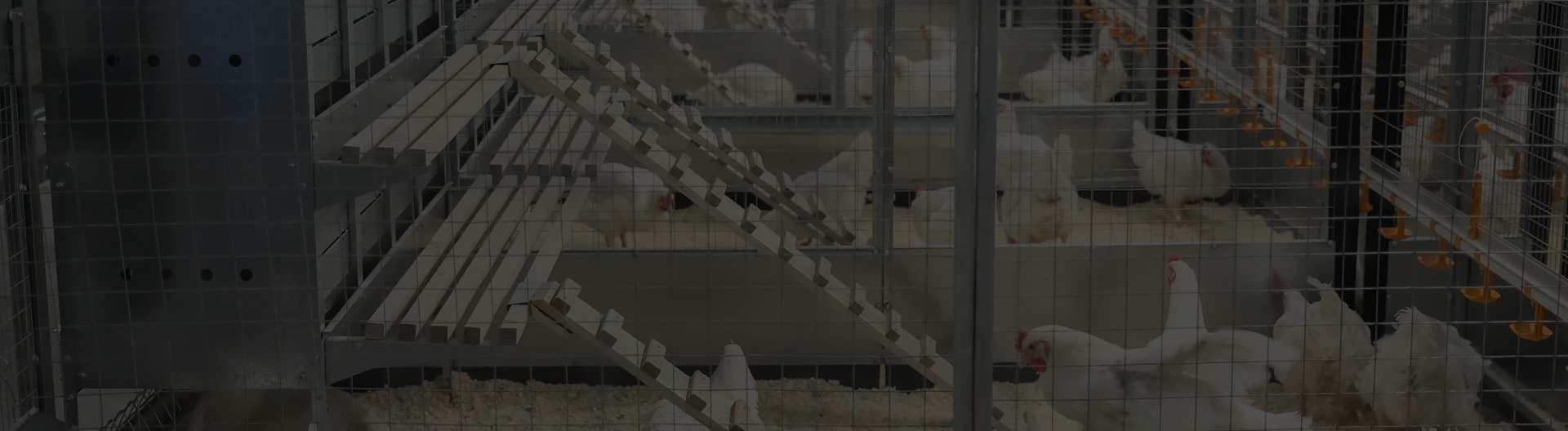
Broiler Growth Performance in Modern Chicken Cage Systems
Dec . 11, 2025 15:01 Back to list
Broiler Growth Performance in Modern Chicken Cage Systems
The commercial broiler industry faces the constant challenge of optimizing growth rates, improving feed conversion, and maintaining high standards of welfare and hygiene to meet global meat demand. Traditionally raised on floors, broilers are increasingly being housed in advanced caging systems, a shift driven by the promise of improved production metrics. The integration of technology in broiler chicken cages marks a significant evolution in poultry farming, offering controlled environments that directly impact bird performance.
Understanding the Transition to the Cage for Broiler Chicken
The traditional deep litter system, while common, presents several challenges, including higher risks of litter-borne diseases (such as coccidiosis), inconsistent feed access, and potential hock and footpad lesions due to wet bedding. The modern cage for broiler chicken is designed to mitigate these issues.
These cages are fundamentally different from layer cages, featuring:
Plastic or specially coated wire mesh floors: Designed to be gentler on the birds' feet, often with small, flexible openings to allow droppings to fall through easily while preventing injury.
Optimal Headroom: Sufficient vertical space is maintained to accommodate the rapid growth and final market weight of the broiler.
Integrated Manure Removal: Automated belts or scrapers beneath the cages continuously remove waste, drastically reducing ammonia levels and the presence of pathogens.
This controlled environment is the foundation upon which enhanced growth performance is built, providing consistency that is difficult to achieve in floor systems.
Broiler Chicken Cages: Key Metrics of Broiler Growth Performance
Evaluating the success of a broiler operation—and the effectiveness of the automatic broiler chicken cage system—relies on three critical performance metrics:
Body Weight (BW): The average weight of the birds at the time of slaughter. Cages must facilitate rapid, uniform growth.
Feed Conversion Ratio (FCR): The amount of feed (in kilograms) required to produce one kilogram of live weight. A lower FCR indicates greater efficiency and lower cost.
Mortality Rate: The percentage of birds lost during the rearing cycle. Lower mortality directly correlates with better welfare and higher final yield.
Research and field trials have consistently shown that when managed correctly, modern caging systems can equal or even surpass the performance of floor systems, particularly in large-scale operations where environmental control is paramount.
The Role of the Automatic Broiler Chicken Cage in Optimization
The integration of automation into broiler housing provides the precise control necessary to push performance boundaries. An automatic broiler chicken cage system includes fully integrated components that remove the variables often present in manual operations.
1. Precision Feeding and Improved FCR
Automated feeding systems (such as travelling hoppers or specialized chain feeders) deliver fresh feed simultaneously to all birds in the broiler chicken cages.
Reduced Waste: Precision dispensing minimizes spillage and prevents birds from selecting desirable particles, ensuring they consume the complete, formulated diet.
Consistent Access: All birds, regardless of their social standing, eat at the same time and pace, reducing competition-induced stress and leading to more uniform flock weights. This consistency is a primary driver for improving FCR.
2. Enhanced Environmental Control for Optimal Growth
The multi-tiered structure of broiler chicken cages for sale allows for high-density farming within a single house, making precise environmental management easier and more impactful.
Ventilation and Air Quality: Continuous manure removal drastically lowers ammonia levels. Coupled with advanced tunnel ventilation, the air quality is superior, leading to fewer respiratory issues and allowing the birds to allocate more metabolic energy to growth rather than fighting stress.
Temperature Consistency: Being separated from the damp litter, the birds are exposed to more uniform temperatures throughout the house, which is vital for maintaining optimal growth rates, especially during the crucial first two weeks.
3. Disease Prevention and Lower Mortality
The separation of the broiler from its feces is perhaps the single most significant factor in reducing disease prevalence in the cage for broiler chicken.
Reduced Pathogen Exposure: Since droppings fall immediately onto a belt for removal, contact with common pathogens like E. coli and coccidia is virtually eliminated. This lowers the need for therapeutic antibiotics and improves overall flock health.
Hock and Footpad Health: While initial cage designs sometimes led to foot issues, modern broiler chicken cages with improved plastic mesh and controlled humidity have minimized these concerns, leading to lower culling rates and better welfare scores.
Management Considerations for Broiler Chicken Cages for Sale
While the equipment offers significant potential, realizing peak performance requires specific management adjustments unique to the caging system. Farms looking at broiler chicken cages for sale must consider:
|
Management Factor |
Cage System Requirement |
Impact on Performance |
|
Initial Placement |
Must be gentle to prevent injury on the mesh. |
Ensures a strong start, crucial for final weight. |
|
Water Nipple Height |
Must be adjustable and precisely managed as birds grow. |
Consistent water intake is essential for high feed intake and FCR. |
|
Stocking Density |
Must be monitored closely to prevent overheating and crowding, even with the vertical space. |
Prevents performance drop due to heat stress and poor air flow. |
|
Floor Maintenance |
Regular inspection of the floor mesh for damage or wear. |
Prevents footpad lesions and ensures welfare compliance. |
The slightly higher initial investment in an automatic broiler chicken cage system is typically offset by the long-term gains in FCR, reduced labor, and lower medication costs, leading to a highly competitive cost per kilogram of meat produced.
Modern broiler chicken cages represent the cutting edge of intensive, efficient poultry production. By providing a clean, controlled, and stress-minimized environment, the automatic broiler chicken cage system drives superior growth performance characterized by faster weight gain, a significantly improved Feed Conversion Ratio, and a lower mortality rate compared to traditional floor systems. For commercial enterprises aiming for sustainability and high-volume output, adopting these advanced caging technologies is not just an option—it is becoming a requirement for maintaining a competitive edge in the global market.
-
Professional Mini Poultry Cage for Efficient Small Scale Farming
NewsApr.16,2026
-
Optimizing Poultry Production with Advanced Cage System Poultry
NewsApr.09,2026
-
Optimizing Layer Poultry Cages for Efficient and Profitable Egg Production
NewsApr.07,2026
-
Comprehensive Guide to Poultry Cages for Layers and Modern Farming Solutions
NewsApr.04,2026
-
Comprehensive Guide to Optimizing Poultry Laying Cages for Egg Production
NewsMar.31,2026
-
Maximize Egg Production with Efficient Poultry Layer Cage Systems
NewsMar.28,2026





 Afrikaans
 Albanian
 Amharic
 Arabic
 Armenian
 Azerbaijani
 Basque
 Belarusian
 Bengali
 Bosnian
 Bulgarian
 Catalan
 Cebuano
 Corsican
 Croatian
 Czech
Czech
 Danish
 Dutch
Dutch
 Esperanto
 Estonian
 Finnish
 French
 Frisian
 Galician
 Georgian
 German
 Greek
Greek
 Gujarati
 Haitian Creole
 Hausa
Hausa
 Hawaiian
 Hebrew
 Hindi
Hindi
 Miao
Miao
 Hungarian
 Icelandic
 Igbo
Igbo
 Indonesian
 Irish
Irish
 Italian
 Japanese
 Javanese
 Kannada
 Kazakh
 Khmer
Khmer
 Rwandese
 Korean
 Kurdish
 Kyrgyz
 Lao
Lao
 Latin
Latin
 Latvian
 Lithuanian
 Luxembourgish
 Macedonian
 Malgashi
 Malay
Malay
 Malayalam
 Maltese
 Maori
Maori
 Marathi
 Mongolian
 Myanmar
 Nepali
 Norwegian
 Norwegian
 Occitan
 Pashto
 Persian
 Polish
 Portuguese
 Punjabi
 Romanian
 Russian
 Samoan
 Scottish Gaelic
 Serbian
 Sesotho
 Shona
Shona
 Sindhi
 Sinhala
 Slovak
 Slovenian
 Somali
 Spanish
 Sundanese
 Swahili
 Swedish
 Tagalog
 Tajik
Tajik
 Tamil
Tamil
 Tatar
Tatar
 Telugu
 Thai
Thai
 Turkish
 Turkmen
 Ukrainian
 Urdu
Urdu
 Uighur
 Uzbek
Uzbek
 Vietnamese
 Welsh
Welsh
 Bantu
Bantu
 Yiddish
 Yoruba
 English