
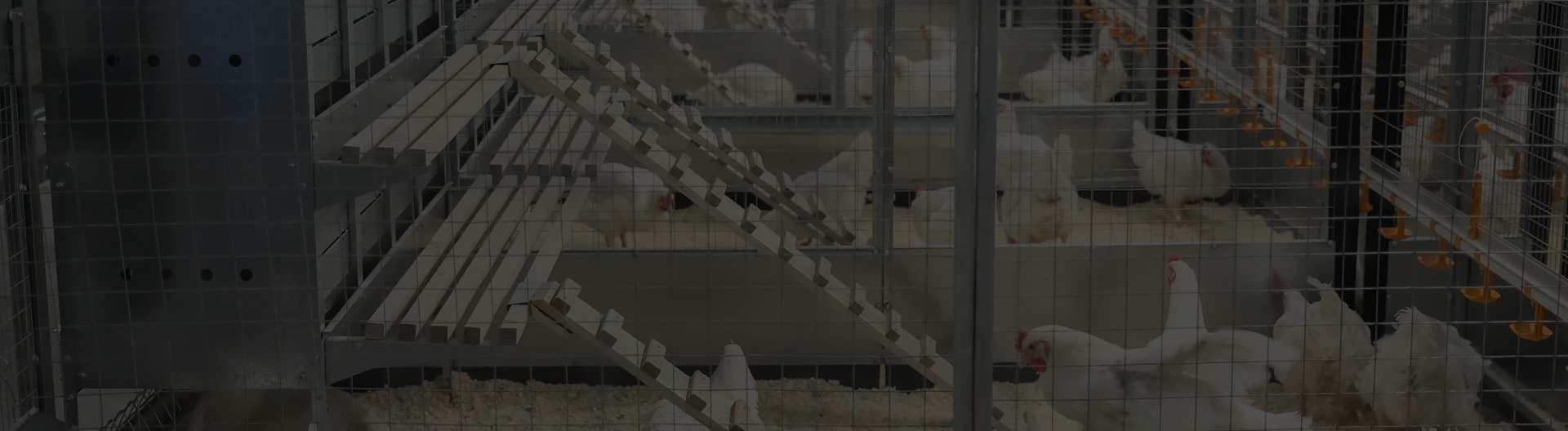
Efficient H Type Chicken Cages for Sustainable Poultry Farming Solutions
Dec . 13, 2025 16:05 Back to list
Efficient H Type Chicken Cages for Sustainable Poultry Farming Solutions
The World of H Type Chicken Cage: More Than Just Poultry Housing
At first glance, the h type chicken cage might sound like another specialized farming gadget. But in reality, it’s a pretty big deal—especially considering the global push for sustainable agriculture and efficient poultry farming. If you’ve ever wondered how large poultry farms juggle animal welfare, productivity, and cost-efficiency at the same time, the design and application of this cage type offers some illuminating answers.
Why does it matter globally? Well, poultry is one of the most widely consumed proteins worldwide—according to the Food and Agriculture Organization (FAO), chicken meat production surpassed 130 million tonnes in 2022. That scale of production relies heavily on housing solutions that are scalable, hygienic, and economically viable. That’s where the h type chicken cage fits in.
Introduction: Why H Type Chicken Cages Are Gaining Global Attention
Poultry farming has become a critical component of food security, especially in fast urbanizing and developing regions. However, rising concerns about disease transmission, labor costs, and environmental footprint put traditional farming methods under strain.
Enter the h type chicken cage: a design innovation that offers improvements in space efficiency, animal health monitoring, and waste management. According to the International Organization for Standardization (ISO), poultry cage standards are crucial for maintaining animal welfare, and modern h-type cages are steadily capturing market attention because they align with these evolving benchmarks.
Notably, regions like Southeast Asia and parts of South America, which dominate in poultry exports, have increasingly adopted this cage type to optimize production amid rising land prices and labor challenges. The challenge remains: how to efficiently produce more chicken with less environmental toll and better animal welfare? This form of caging addresses that in practical terms.
What Is an H Type Chicken Cage?
Simply put, an h type chicken cage is a specialized framework designed for housing layers (egg-laying hens) or broilers in a stacked, modular setup. The "H" refers to the cage’s structural design, resembling the letter 'H' when viewed from the side — allowing for tiered rows that maximize vertical space.
These cages are often made from galvanized steel wire mesh with plastic-coated trays to facilitate easy cleaning and durability. More importantly, their design promotes better airflow, reduces the spread of disease among birds, and optimizes feed distribution.
In modern poultry farming, where high-density living is often the reality, h type cages offer a solution that balances productivity with regulatory and welfare concerns. Oddly enough, despite some criticism of cage systems in general, these cages appear to be a middle ground between traditional battery cages and cage-free systems, especially in regions needing scalable options quickly.
Core Components and What Makes Them Tick
1. Durability and Materials
Most h type chicken cages rely on galvanized steel, often hot-dipped, to withstand corrosion from moisture and manure acids. This means they can last up to 8–10 years in typical farm environments, which is pretty decent considering the demanding conditions.
2. Space Optimization
The tiered structure (often 2 to 5 levels) maximizes floor space — critical in areas with limited land. The clever design also ensures hens have enough room to move slightly, minimizing stress and improving egg-laying rates.
3. Hygiene and Waste Management
With sloped floors, droppings conveniently fall through the cage to manure belts or trays, allowing easy collection and reducing contamination risks. I’ve noticed from farm visits that this lowers both labor and disease risks significantly.
4. Ease of Feed and Water Delivery
H type cages often incorporate automatic feeding and nipple watering systems, reducing manual effort and standardizing feed intake. This automation plays into higher uniformity in bird growth and lower feed waste.
5. Cost Efficiency
Compared to fully cage-free systems, the initial investment for h type cages can be higher, but the payback in productivity and reduced disease-related losses often makes this a smart long-term choice.
Product Specifications: Typical H Type Chicken Cage Setup
| Specification | Description |
|---|---|
| Material | Hot-dipped galvanized steel wire with PVC coating |
| Dimensions (per cage unit) | 120 cm (L) × 50 cm (W) × 40 cm (H) |
| Tier Levels | 2–5 tiers configurable |
| Capacity per unit | 5–8 hens |
| Waste collection system | Sloped floor with manure belts or trays |
| Automation compatibility | Feeders and nipple drinkers included or adaptable |
Global Vendors: How Does the Market Stack Up?
| Vendor | Region | Material Quality | Customization | Typical Lead Time | Price Range (per unit) |
|---|---|---|---|---|---|
| Yize Machine Co. | China | High-grade galvanized steel | Yes, modular configurations | 4–6 weeks | $50–70 |
| FarmEquip Solutions | USA | Stainless steel option available | Limited | 6–8 weeks | $70–90 |
| AgroVita | Brazil | Standard galvanized | Yes, tier customization | 5–7 weeks | $45–65 |
Practical Applications Around the World
H type chicken cages are not just theoretical constructs—they’re widely deployed across varied environments. In Asia, for example, intensive layer farms rely on them for egg production where land is expensive and labor is tight. Many poultry businesses in China, Vietnam, and Thailand praise the system for its space-saving factor and ease of hygiene management.
In South America, medium-sized farms leverage these cages to scale output without investing in sprawling land, especially near urban centers. Some NGOs promoting sustainable farming practices even use h type cages to boost income for rural women by facilitating easier flock management.
Oddly enough, in some industrial zones with limited resources, automated h type systems help maintain stable poultry outputs even when manual labor is scarce — that’s a good nod to modern agrotechnology.
Advantages and Long-Term Impact
- Cost-effectiveness: Lower labor costs due to automation compatibility and easier waste management.
- Sustainability: Efficient use of space reduces environmental footprint while facilitating manure collection for bio-energy or fertilizers.
- Animal welfare: Improved airflow and space provisions help reduce disease and stress.
- Reliability: Long-lasting materials minimize replacement frequency.
- Social impact: Supports livelihoods in developing countries by enabling scalable poultry production.
Many farmers say it’s the “Swiss army knife” of poultry housing: flexible, durable, and practical.
What’s Next? Future Trends in H Type Chicken Cages
Going forward, several exciting trends are influencing how h type chicken cages evolve:
- Smart farming integration: Sensors monitoring feeding, temperature, and bird health will be more broadly integrated into cage designs.
- Sustainable materials: Research is underway on bio-composite coatings to replace PVC and further reduce environmental impacts.
- Modular automation: Enhanced robotics for egg collection and waste disposal are making their way into commercial setups.
- Policy and welfare regulations: As animal welfare laws tighten globally, cage designs are adapting to provide better space allowances and enrichments.
It's like the industry is heading toward a blend of tradition with high-tech nuance — a kind of hybrid future where efficiency meets empathy.
Challenges and Ways Ahead
Of course, no system is perfect. H type chicken cages face criticism regarding restricted movement for birds and the upfront investment cost. Also, maintenance in harsh climates can be tricky without proper materials and coatings.
Experts recommend:
- Using eco-friendly coatings to reduce corrosion and toxicity.
- Design improvements to increase cage space per bird within welfare standards.
- Training farm staff on maintenance and automation to reduce downtime.
I suppose the real challenge is balancing efficiency with humane treatment — something that many industries wrestle with.
FAQ: Common Questions About H Type Chicken Cages
- How do h type chicken cages improve egg production?
- By providing controlled space, better ventilation, and efficient feed and water delivery, h type cages reduce stress and disease incidence, resulting in higher egg yields.
- Are these cages suitable for cage-free poultry farms?
- Not typically. The h type design is a middle ground between battery cages and free-range systems, mainly suited for intensive farming setups rather than fully cage-free production.
- Can h type chicken cages be customized for different bird sizes?
- Yes, they are modular and often customizable for various hen breeds or broiler sizes by adjusting cage dimensions and tier levels.
- What maintenance is required to keep these cages safe and effective?
- Regular cleaning of trays, checking for corrosion, and servicing feeding and watering mechanisms are essential. Most manufacturers provide guidelines.
- How can I buy or inquire about h type chicken cages for my farm?
- Many vendors, including Yize Machine, offer online catalogs and consultation services to help you select the right configuration.
Wrapping Up: Why H Type Chicken Cages Matter
The h type chicken cage isn’t just a farming convenience — it’s a practical response to global pressures on food production, sustainability, and animal health. For poultry farmers, especially in regions where space and resources are at a premium, it strikes a smart balance of efficiency, economy, and welfare.
Still curious? Dive deeper or get a hands-on consultation by visiting Yize Machine — they are one of the leading suppliers bringing this technology closer to farms worldwide.
After all, the future of farming might look stacked, streamlined, and smart-equipped — all crafted around something as simple as an h type chicken cage.
References:
1. Food and Agriculture Organization of the United Nations (FAO), Poultry Statistics, 2023.
2. ISO 9001 Standards for Poultry Housing, 2022.
3. World Bank Agriculture Data, 2022.
-
Professional Mini Poultry Cage for Efficient Small Scale Farming
NewsApr.16,2026
-
Optimizing Poultry Production with Advanced Cage System Poultry
NewsApr.09,2026
-
Optimizing Layer Poultry Cages for Efficient and Profitable Egg Production
NewsApr.07,2026
-
Comprehensive Guide to Poultry Cages for Layers and Modern Farming Solutions
NewsApr.04,2026
-
Comprehensive Guide to Optimizing Poultry Laying Cages for Egg Production
NewsMar.31,2026
-
Maximize Egg Production with Efficient Poultry Layer Cage Systems
NewsMar.28,2026





 Afrikaans
 Albanian
 Amharic
 Arabic
 Armenian
 Azerbaijani
 Basque
 Belarusian
 Bengali
 Bosnian
 Bulgarian
 Catalan
 Cebuano
 Corsican
 Croatian
 Czech
Czech
 Danish
 Dutch
Dutch
 Esperanto
 Estonian
 Finnish
 French
 Frisian
 Galician
 Georgian
 German
 Greek
Greek
 Gujarati
 Haitian Creole
 Hausa
Hausa
 Hawaiian
 Hebrew
 Hindi
Hindi
 Miao
Miao
 Hungarian
 Icelandic
 Igbo
Igbo
 Indonesian
 Irish
Irish
 Italian
 Japanese
 Javanese
 Kannada
 Kazakh
 Khmer
Khmer
 Rwandese
 Korean
 Kurdish
 Kyrgyz
 Lao
Lao
 Latin
Latin
 Latvian
 Lithuanian
 Luxembourgish
 Macedonian
 Malgashi
 Malay
Malay
 Malayalam
 Maltese
 Maori
Maori
 Marathi
 Mongolian
 Myanmar
 Nepali
 Norwegian
 Norwegian
 Occitan
 Pashto
 Persian
 Polish
 Portuguese
 Punjabi
 Romanian
 Russian
 Samoan
 Scottish Gaelic
 Serbian
 Sesotho
 Shona
Shona
 Sindhi
 Sinhala
 Slovak
 Slovenian
 Somali
 Spanish
 Sundanese
 Swahili
 Swedish
 Tagalog
 Tajik
Tajik
 Tamil
Tamil
 Tatar
Tatar
 Telugu
 Thai
Thai
 Turkish
 Turkmen
 Ukrainian
 Urdu
Urdu
 Uighur
 Uzbek
Uzbek
 Vietnamese
 Welsh
Welsh
 Bantu
Bantu
 Yiddish
 Yoruba
 English