
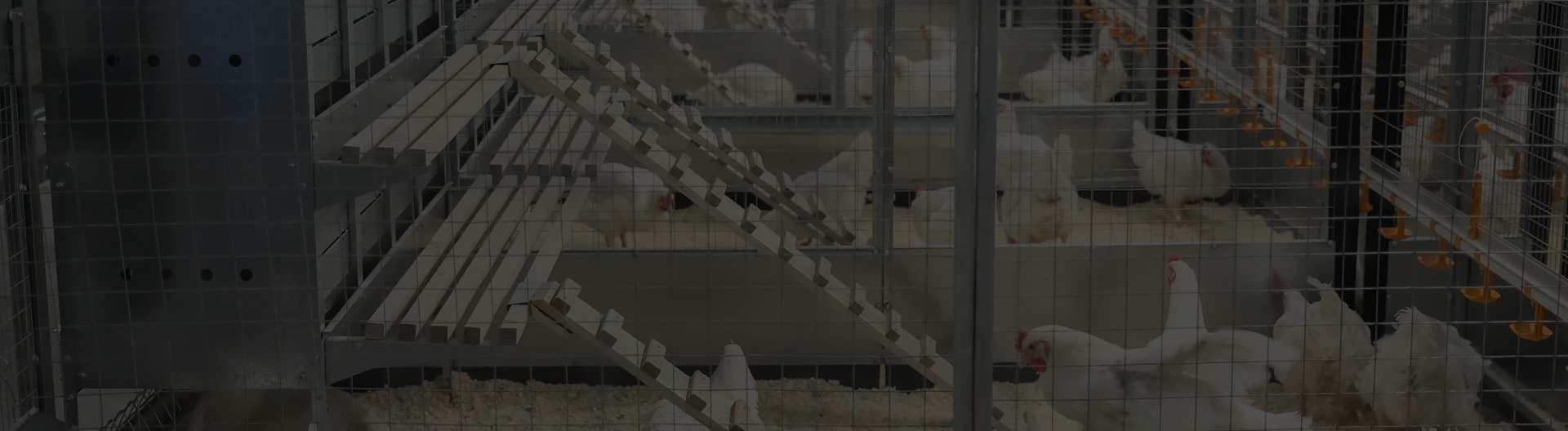
Broiler Cage Essentials: Quality, Design, and Vendor Insights
Dec . 13, 2025 00:25 Back to list
Broiler Cage Essentials: Quality, Design, and Vendor Insights
Why a broiler cage Still Matters in Modern Poultry Farming
Having spent years in the industrial equipment world, I’ve seen all sorts of poultry housing evolve—from the simple to the downright complex. But the humble broiler cage remains surprisingly relevant, especially for intensive chicken farming. Oddly enough, despite all the high-tech alternatives, the design and materials used in broiler cages still make a world of difference for efficiency and animal welfare.
Now, if you’ve ever been on a poultry farm or chatted with livestock equipment experts, you’ll know broiler cages aren’t just “wireframes.” They’re engineered systems designed to optimize airflow, waste removal, and bird management. Frankly, the quality of steel mesh and welds can make or break a batch in terms of survival rates and growth performance.
Over the years, I noticed that many manufacturers still prefer galvanized wire cage frames. The corrosion resistance it offers under humid, waste-heavy conditions is simply non-negotiable. That initial investment into quality materials pays off with longevity, reducing maintenance downtime. In real terms, a cage corroding prematurely can be a nightmare to replace mid-cycle.
Equally important is the cage’s modular design. From personal experience, farms favor broiler cages that are easily assembled and scalable, allowing them to expand operations without tearing everything apart. Some systems have integrated manure belts or trays, making daily cleaning and biosecurity protocols a bit more manageable.
| Broiler Cage Specification | Details |
|---|---|
| Material | Galvanized Steel Wire (Ø1.8–2.0 mm) |
| Dimensions (L×W×H) | 120cm × 60cm × 40cm (standard per tier) |
| Bird Capacity | 8–12 Broilers per cage |
| Coating | Hot-dipped Galvanized or PVC Coated |
| Weight Capacity | Up to 35 kg per cage |
| Assembly | Modular bolt and hook system |
One interesting thing I’ve come across talking with poultry engineers is the trade-off between open wire flooring and slatted or plastic floors. It’s sort of a debated topic. Some swear by wire mesh floors for better ventilation and waste drainage, though they admit bird foot health needs monitoring. Others opt for plastic slats to reduce footpad lesions but sometimes struggle with waste buildup. You know, it’s never one-size-fits-all.
Speaking of vendors, I gathered some data comparing a few leading broiler cage suppliers. It’s surprising how features can vary, from corrosion protection methods to customization flexibility and pricing — which, of course, influences farm decisions heavily.
| Vendor | Material Quality | Customization | Price Range | Warranty |
|---|---|---|---|---|
| Yize Machine | Galvanized Steel, PVC option | High (custom dimensions & coatings) | Mid-range | 2 years |
| Vendor B | Standard galvanized | Low | Budget | 1 year |
| Vendor C | Stainless Steel | Moderate | Premium | 3 years |
In one memorable project, a mid-size farm switched to a modular broiler cage system from Yize Machine. They reported easier cleaning, improved bird health, and noticeable growth rate improvements within the first cycle. It felt like a subtle upgrade but paid dividends sooner than expected. Stories like that remind me that reliable equipment isn’t just metal and wire; it’s part of a bigger system that helps farmers thrive.
So, if you’re scouting for broiler cages, remember that quality steel, proper galvanization, and modular designs matter, but so does working with vendors who get your operational needs. For those who ask me, I’d say: don’t overlook these factors—your birds’ health, and frankly your bottom line, depend on them.
Just food for thought from someone who’s been close to the dust and wire for a while...
References:
- Industry reports on poultry cage designs, PoultryTech 2023
- Farm case studies, Progressive Poultry Magazine, 2022
- Technical analysis, Galvanization and Coating Methods in Livestock Equipment
-
Professional Mini Poultry Cage for Efficient Small Scale Farming
NewsApr.16,2026
-
Optimizing Poultry Production with Advanced Cage System Poultry
NewsApr.09,2026
-
Optimizing Layer Poultry Cages for Efficient and Profitable Egg Production
NewsApr.07,2026
-
Comprehensive Guide to Poultry Cages for Layers and Modern Farming Solutions
NewsApr.04,2026
-
Comprehensive Guide to Optimizing Poultry Laying Cages for Egg Production
NewsMar.31,2026
-
Maximize Egg Production with Efficient Poultry Layer Cage Systems
NewsMar.28,2026





 Afrikaans
 Albanian
 Amharic
 Arabic
 Armenian
 Azerbaijani
 Basque
 Belarusian
 Bengali
 Bosnian
 Bulgarian
 Catalan
 Cebuano
 Corsican
 Croatian
 Czech
Czech
 Danish
 Dutch
Dutch
 Esperanto
 Estonian
 Finnish
 French
 Frisian
 Galician
 Georgian
 German
 Greek
Greek
 Gujarati
 Haitian Creole
 Hausa
Hausa
 Hawaiian
 Hebrew
 Hindi
Hindi
 Miao
Miao
 Hungarian
 Icelandic
 Igbo
Igbo
 Indonesian
 Irish
Irish
 Italian
 Japanese
 Javanese
 Kannada
 Kazakh
 Khmer
Khmer
 Rwandese
 Korean
 Kurdish
 Kyrgyz
 Lao
Lao
 Latin
Latin
 Latvian
 Lithuanian
 Luxembourgish
 Macedonian
 Malgashi
 Malay
Malay
 Malayalam
 Maltese
 Maori
Maori
 Marathi
 Mongolian
 Myanmar
 Nepali
 Norwegian
 Norwegian
 Occitan
 Pashto
 Persian
 Polish
 Portuguese
 Punjabi
 Romanian
 Russian
 Samoan
 Scottish Gaelic
 Serbian
 Sesotho
 Shona
Shona
 Sindhi
 Sinhala
 Slovak
 Slovenian
 Somali
 Spanish
 Sundanese
 Swahili
 Swedish
 Tagalog
 Tajik
Tajik
 Tamil
Tamil
 Tatar
Tatar
 Telugu
 Thai
Thai
 Turkish
 Turkmen
 Ukrainian
 Urdu
Urdu
 Uighur
 Uzbek
Uzbek
 Vietnamese
 Welsh
Welsh
 Bantu
Bantu
 Yiddish
 Yoruba
 English