
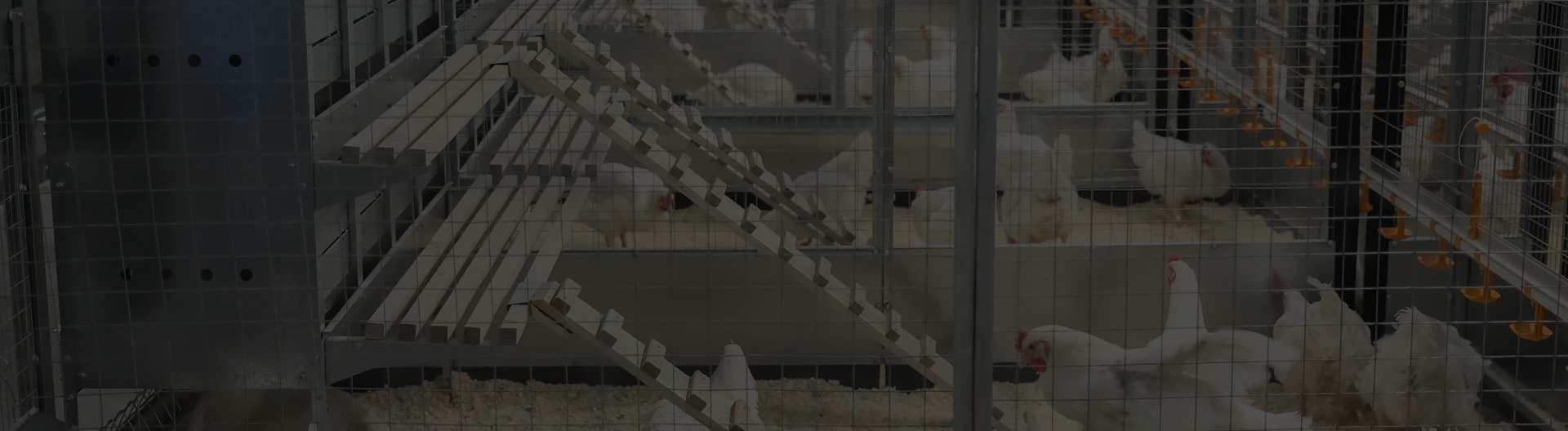
2 Storey Indoor Rabbit Cage Solutions for Commercial Breeders
Jan . 25, 2026 01:20 Back to list
2 Storey Indoor Rabbit Cage Solutions for Commercial Breeders
Understanding the Rise of the 2 Storey Indoor Rabbit Cage
It's funny, isn't it? You don't necessarily set out to become an expert in rabbit housing. But here we are. I suppose it started with a request from a commercial breeder looking for something… better. Something more efficient, easier to clean, and frankly, something that wouldn't fall apart after six months. That initial need quickly led to understanding the broader demand for robust 2 Storey Indoor Rabbit Cage solutions, especially within larger-scale breeding and research facilities. What we’ve noticed is a real shift toward prioritizing animal welfare alongside operational efficiency—and the cage design is central to both. It feels like a turning point, actually.
Technical Specifications and Design Considerations
The core of a good 2 Storey Indoor Rabbit Cage isn't just about having two levels. It’s about the materials, the construction, and the attention to detail. We've moved away from flimsy wire mesh in favor of heavy-gauge, galvanized steel, primarily for longevity. The flooring is a critical area – plastic slatted floors are common, but we’re testing composite materials to improve comfort and reduce footpad dermatitis. The dimensions, of course, vary depending on breed and purpose, but we've standardized on a few key sizes to optimize shipping and assembly. Oddly enough, the most challenging part wasn't the steel, but getting the locking mechanisms just right—preventing escapes without creating a maintenance nightmare.
| Specification | Value | Notes |
|---|---|---|
| Material (Frame) | Galvanized Steel | Rust-resistant coating |
| Material (Flooring) | PP Plastic / Composite | Removable for cleaning |
| Dimensions (Standard) | 1200 x 600 x 900 mm | Customizable |
Vendor Landscape and Competitive Advantages
The market’s… fragmented, to put it mildly. There's a lot of low-cost competition, but quality varies wildly. Many engineers say the biggest problem with cheaper cages is the weld integrity—they simply don’t hold up to regular sanitation. We've focused on building a product that's not just affordable, but durable, minimizing lifecycle costs for our clients. We've also invested in design flexibility, offering customization options that many of our competitors don’t. One client, a research lab at a local university, needed cages with specific dimensions to accommodate sensor arrays—something off-the-shelf products couldn't provide.
| Vendor | Material Quality | Customization | Price (Approx.) |
|---|---|---|---|
| Yizemachine | High (Galvanized Steel) | Extensive | $250 - $400 |
| Competitor A | Medium (Steel/Plastic) | Limited | $180 - $300 |
| Competitor B | Low (Light Gauge Steel) | None | $100 - $200 |
Looking Ahead: Trends and Sustainability
There’s a growing focus on biosecurity in animal housing, frankly. The demand for cages that are easy to disinfect and prevent disease transmission is rising, and I think that's going to continue. We're also exploring more sustainable materials – recycled plastics and alternative coatings—but finding options that meet durability requirements is challenging. The regulations around animal welfare are tightening, too, which is a good thing, and it's driving demand for higher-quality housing solutions. It’s an interesting space, you know? It's not just about building cages; it’s about contributing to animal health and operational efficiency.
- What is a 2 Storey Indoor Rabbit Cage and why is it beneficial?
- A 2 Storey Indoor Rabbit Cage maximizes space utilization by providing separate areas for resting and activity, improving rabbit welfare and simplifying cleaning for operators.
- What industries use these cages?
- Primarily used in commercial rabbit breeding, research laboratories, and veterinary facilities where space optimization and hygiene are crucial.
- How does Yizemachine ensure quality?
- We use heavy-gauge galvanized steel, rigorous weld testing, and customizable designs to ensure durability and meet specific client needs.
In conclusion...
Investing in a well-designed 2 Storey Indoor Rabbit Cage is an investment in long-term efficiency and animal welfare. Explore our customizable options at https://www.yizemachine.com.
-
Professional Mini Poultry Cage for Efficient Small Scale Farming
NewsApr.16,2026
-
Optimizing Poultry Production with Advanced Cage System Poultry
NewsApr.09,2026
-
Optimizing Layer Poultry Cages for Efficient and Profitable Egg Production
NewsApr.07,2026
-
Comprehensive Guide to Poultry Cages for Layers and Modern Farming Solutions
NewsApr.04,2026
-
Comprehensive Guide to Optimizing Poultry Laying Cages for Egg Production
NewsMar.31,2026
-
Maximize Egg Production with Efficient Poultry Layer Cage Systems
NewsMar.28,2026





 Afrikaans
 Albanian
 Amharic
 Arabic
 Armenian
 Azerbaijani
 Basque
 Belarusian
 Bengali
 Bosnian
 Bulgarian
 Catalan
 Cebuano
 Corsican
 Croatian
 Czech
Czech
 Danish
 Dutch
Dutch
 Esperanto
 Estonian
 Finnish
 French
 Frisian
 Galician
 Georgian
 German
 Greek
Greek
 Gujarati
 Haitian Creole
 Hausa
Hausa
 Hawaiian
 Hebrew
 Hindi
Hindi
 Miao
Miao
 Hungarian
 Icelandic
 Igbo
Igbo
 Indonesian
 Irish
Irish
 Italian
 Japanese
 Javanese
 Kannada
 Kazakh
 Khmer
Khmer
 Rwandese
 Korean
 Kurdish
 Kyrgyz
 Lao
Lao
 Latin
Latin
 Latvian
 Lithuanian
 Luxembourgish
 Macedonian
 Malgashi
 Malay
Malay
 Malayalam
 Maltese
 Maori
Maori
 Marathi
 Mongolian
 Myanmar
 Nepali
 Norwegian
 Norwegian
 Occitan
 Pashto
 Persian
 Polish
 Portuguese
 Punjabi
 Romanian
 Russian
 Samoan
 Scottish Gaelic
 Serbian
 Sesotho
 Shona
Shona
 Sindhi
 Sinhala
 Slovak
 Slovenian
 Somali
 Spanish
 Sundanese
 Swahili
 Swedish
 Tagalog
 Tajik
Tajik
 Tamil
Tamil
 Tatar
Tatar
 Telugu
 Thai
Thai
 Turkish
 Turkmen
 Ukrainian
 Urdu
Urdu
 Uighur
 Uzbek
Uzbek
 Vietnamese
 Welsh
Welsh
 Bantu
Bantu
 Yiddish
 Yoruba
 English