Automatic feeding carts represent a significant advancement in logistical efficiency, particularly within industries demanding precise and timely material delivery. These carts, often automated or remotely controlled, are revolutionizing processes across agriculture, manufacturing, and even large-scale event management. The increasing need for streamlined workflows and reduced labor costs globally is driving the adoption of this technology, enhancing productivity and minimizing errors. The core benefit lies in their ability to consistently deliver materials to designated points, freeing up human resources for more complex tasks.
The impact of automatic feeding carts extends beyond mere operational improvements. They contribute to safer working environments by reducing manual handling of heavy loads and navigating potentially hazardous areas. Furthermore, their precision minimizes waste and optimizes resource allocation. This is particularly crucial in sectors sensitive to material costs, like the pharmaceutical or food processing industries. The versatility of these carts allows for customization based on specific industry needs, making them an adaptable solution for a broad range of applications.
As global supply chains become increasingly complex and demands for faster turnaround times grow, the role of automatic feeding carts will only become more prominent. Their ability to integrate with existing automation systems and provide real-time tracking data positions them as a key component of the future of logistics. Investments in this technology are not just about improving today's operations; they're about building a resilient and adaptable infrastructure for tomorrow’s challenges.
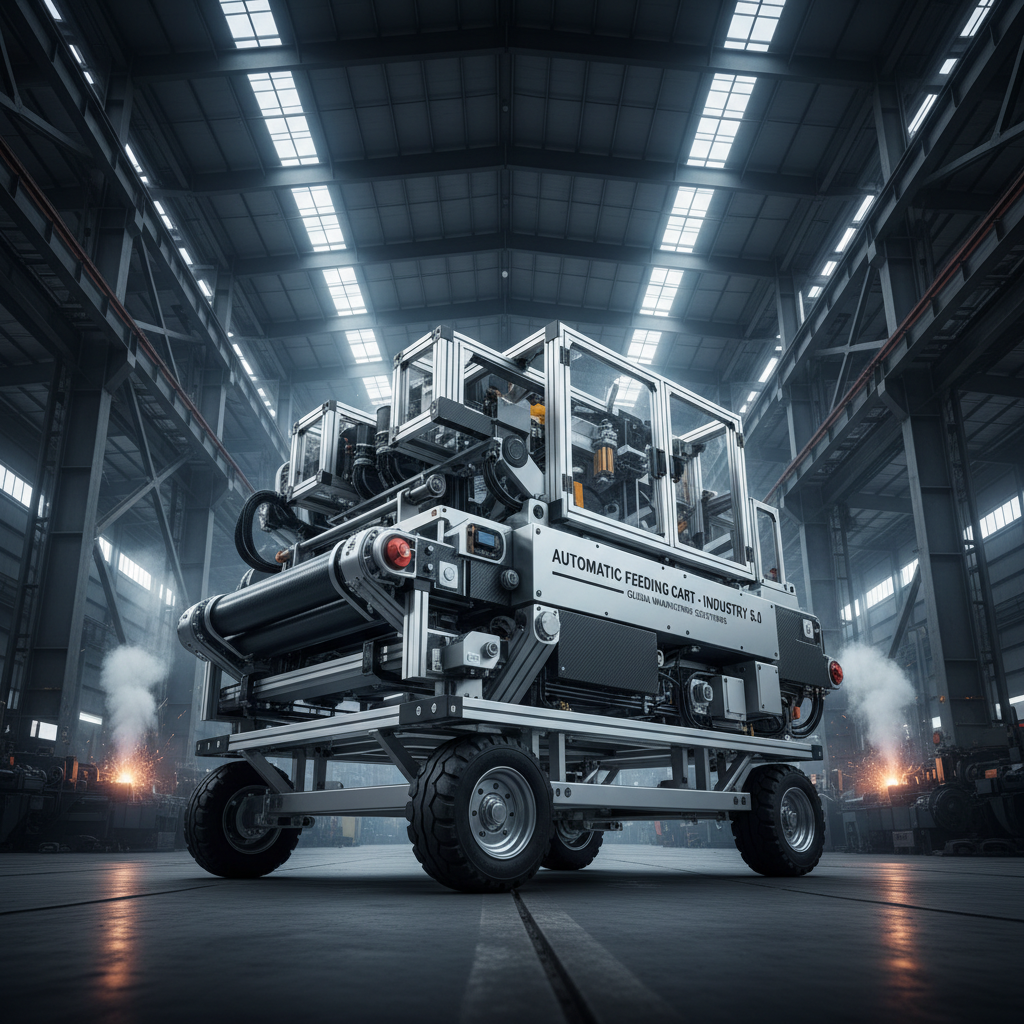

Automatic feeding carts are becoming indispensable tools in modern logistics. They are engineered to autonomously or semi-autonomously transport materials within a defined environment, improving operational efficiency and reducing reliance on manual labor. These carts are equipped with various sensors, navigation systems, and safety features to ensure reliable and precise material delivery.
The implementation of these systems can significantly optimize workflows in several industries. From delivering components on a manufacturing floor to transporting feed in agricultural settings, the versatility of an automatic feeding cart is a key factor driving its increasing popularity. Properly implemented, they contribute to safer and more productive operational environments.
The ROI varies depending on the application and scale of implementation, but businesses generally see a return within 12-24 months. This is driven by reduced labor costs, increased efficiency, and minimized material waste. Factors such as the initial investment, operating costs, and the extent of automation all contribute to the overall ROI. Careful analysis of these elements is crucial to forecasting accurate returns.
Modern automatic feeding carts utilize advanced sensors, such as LiDAR and cameras, combined with sophisticated navigation algorithms. These technologies enable them to dynamically map their environment, detect obstacles, and adjust their routes in real-time. AI-powered systems can even learn and adapt to changing conditions, ensuring efficient and safe operation in complex settings.
Safety is a top priority in the design of automatic feeding carts. Common features include emergency stop buttons, obstacle detection sensors, speed control systems, and audible warning signals. Some models also incorporate virtual safety fences and collision avoidance technologies to prevent accidents and ensure a safe working environment. Regular maintenance and safety checks are essential.
Most reputable manufacturers design automatic feeding carts to be compatible with industry-standard WMS and ERP systems. Integration typically involves APIs and communication protocols that allow for seamless data exchange. This enables real-time tracking of materials, optimized routing, and improved inventory management. Custom integration may be required for older or less common WMS.
Maintenance generally involves routine checks of battery life, sensor calibration, and mechanical components. Scheduled preventative maintenance, like tire changes and sensor cleaning, is crucial for ensuring optimal performance and longevity. Most manufacturers offer maintenance packages and remote diagnostics to minimize downtime and keep the carts operating efficiently.
With proper maintenance and care, automatic feeding carts can have a lifespan of 5-10 years or even longer. The lifespan depends on factors like usage frequency, environmental conditions, and the quality of the components. Regular servicing and timely replacement of worn parts are essential for maximizing the cart’s operational life and minimizing long-term costs.
Automatic feeding carts represent a transformative technology poised to redefine material handling across numerous industries. Their ability to enhance efficiency, reduce costs, and improve safety makes them a compelling investment for businesses seeking to optimize their operations. The integration of AI, IoT, and advanced robotics promises to unlock even greater potential in the years to come.
As global supply chains evolve and the demand for automation intensifies, automatic feeding carts will play an increasingly critical role in driving productivity and innovation. We encourage businesses to explore the possibilities of this technology and leverage its benefits to gain a competitive edge. To learn more about how automatic feeding cart solutions can benefit your organization, visit our website today.






 Afrikaans
 Albanian
 Amharic
 Arabic
 Armenian
 Azerbaijani
 Basque
 Belarusian
 Bengali
 Bosnian
 Bulgarian
 Catalan
 Cebuano
 Corsican
 Croatian
 Czech
Czech
 Danish
 Dutch
Dutch
 Esperanto
 Estonian
 Finnish
 French
 Frisian
 Galician
 Georgian
 German
 Greek
Greek
 Gujarati
 Haitian Creole
 Hausa
Hausa
 Hawaiian
 Hebrew
 Hindi
Hindi
 Miao
Miao
 Hungarian
 Icelandic
 Igbo
Igbo
 Indonesian
 Irish
Irish
 Italian
 Japanese
 Javanese
 Kannada
 Kazakh
 Khmer
Khmer
 Rwandese
 Korean
 Kurdish
 Kyrgyz
 Lao
Lao
 Latin
Latin
 Latvian
 Lithuanian
 Luxembourgish
 Macedonian
 Malgashi
 Malay
Malay
 Malayalam
 Maltese
 Maori
Maori
 Marathi
 Mongolian
 Myanmar
 Nepali
 Norwegian
 Norwegian
 Occitan
 Pashto
 Persian
 Polish
 Portuguese
 Punjabi
 Romanian
 Russian
 Samoan
 Scottish Gaelic
 Serbian
 Sesotho
 Shona
Shona
 Sindhi
 Sinhala
 Slovak
 Slovenian
 Somali
 Spanish
 Sundanese
 Swahili
 Swedish
 Tagalog
 Tajik
Tajik
 Tamil
Tamil
 Tatar
Tatar
 Telugu
 Thai
Thai
 Turkish
 Turkmen
 Ukrainian
 Urdu
Urdu
 Uighur
 Uzbek
Uzbek
 Vietnamese
 Welsh
Welsh
 Bantu
Bantu
 Yiddish
 Yoruba
 English