
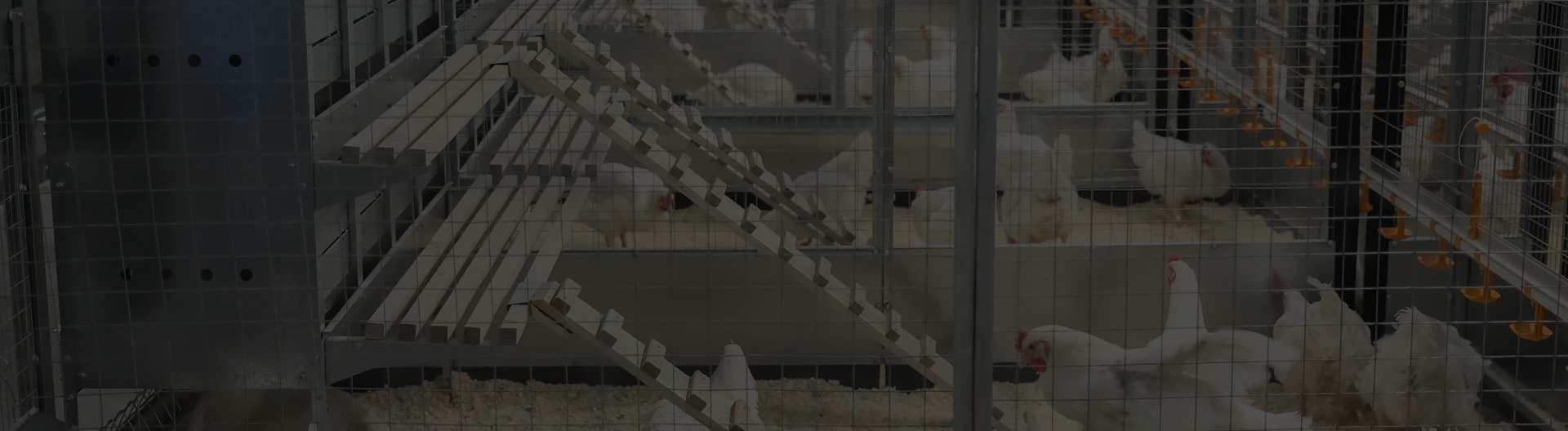
Automatic Broiler Chicken Cage: Efficiency & Innovation in Poultry Farming
Dec . 01, 2025 10:00 Back to list
Automatic Broiler Chicken Cage: Efficiency & Innovation in Poultry Farming
What is an Automatic Broiler Chicken Cage and Why Does It Matter?
Automatic broiler chicken cages might sound like something only poultry farmers care about, but frankly, they touch a much wider audience. These cages are designed to house broiler chickens efficiently, keeping them healthy and growing fast while helping producers minimize labor and waste.
Why should we care globally? Well, poultry is one of the most consumed meats worldwide—representing around 35% of global meat consumption according to the FAO (Food and Agriculture Organization). With rising demand, especially in developing nations, smarter farming solutions like automatic broiler chicken cages help meet food security challenges sustainably.
In a nutshell: Understanding these cages’ design and impact reveals a lot about modern agriculture's push toward automation, animal welfare, and environmental care.
Global Context: Why Automatic Broiler Chicken Cages Are Taking Over
The global poultry market isn’t just expanding; it’s transforming. From the United States to Southeast Asia, demand for broiler meat is projected to increase by over 30% in the next decade (source: World Bank). Yet with this growth comes pressure on resources—land, water, labor—and a need to reduce environmental impacts.
Automation steps in as a game-changer. Automatic broiler chicken cages reduce manual labor for feeding, watering, and manure removal. They also improve flock health by ensuring cleaner, consistent environments, thereby reducing disease outbreaks. This is crucial because worldwide, poultry diseases cost billions every year (the World Organisation for Animal Health estimates annual losses up to $6 billion).
Unfortunately, traditional floor-rearing systems still dominate many regions, leading to inefficiency, higher mortality, and stressful conditions for both birds and farmers.
Defining the Automatic Broiler Chicken Cage
Put simply, an automatic broiler chicken cage is a modular enclosure system designed to house broiler chickens with integrated automated features. These include feeding systems, drinking lines, manure belts, and sometimes environmental controls like ventilation.
This system contrasts with traditional brooders or deep-litter houses by adding mechanization to reduce manual input while maintaining optimal conditions for broilers to grow quickly, safely, and comfortably.
Interestingly enough, these cages link closely not only to industrial poultry farming but also to humanitarian efforts aiming to boost local food production sustainably in vulnerable areas.
Key Components and Features That Define Quality
1. Durability and Materials
Most automatic cages use galvanized steel to resist corrosion, combined with plastic or PVC-coated wire mesh for good ventilation and easy cleaning. Durability is key—chicken farming environments are notoriously harsh with moisture and ammonia.
2. Integrated Automation
Automatic feeders and drinkers save manpower while minimizing feed waste, a big cost factor. The cage’s manure belt system further automates cleaning by moving droppings away continuously, improving hygiene.
3. Scalability and Modularity
Systems can range from a few cages to massive multi-tiered setups that house tens of thousands of birds. Modularity allows farmers to expand or upgrade without replacing everything.
4. Animal Welfare and Biosecurity
Proper spacing, airflow, and automated cleaning reduce stress and disease among broilers, supporting welfare standards increasingly demanded by consumers and regulations.
5. Cost Efficiency
While initial investment is higher than basic housing, savings from reduced labor, lower mortality rates, feed conversion improvements, and disease control make these cages economically attractive in the long term.
Product Specifications at a Glance
| Feature | Specification | Benefit |
|---|---|---|
| Material | Galvanized steel & PVC mesh | Corrosion resistant, long lifespan |
| Automation | Feeders, drinkers, manure belts | Labor saving, cleaner environment |
| Cage Size | 1.2m x 1.0m x 0.5m per unit approx. | Optimized bird density, comfortable space |
| Bird Capacity | 10–15 broilers per cage | Maximizes growth with proper spacing |
| Modularity | Stackable multi-tier options | Scalable farm size; space saving |
How Automatic Broiler Chicken Cages Change Agriculture Globally
Countries with large poultry sectors like China, Brazil, and the US have widely adopted automatic cages. However, they also bring benefits to emerging markets in Africa and Asia, where mechanized farming boosts production without straining traditional labor forces.
In some post-disaster recovery scenarios, rapid deployment of modular poultry cages helps small communities restart food sources quickly—sort of like “pop-up” farms.
Industries in remote areas value how these cages automate daily tasks, reducing the need for skilled labor, which is often scarce. Plus, automatic broiler chicken cages directly contribute to safer food supply chains by lowering disease risks.
Vendor Comparison: What to Look For When Buying
| Vendor | Automation Level | Material Quality | Price Range (per cage) | Warranty |
|---|---|---|---|---|
| Yize Machine | Full automation (feed + water + manure belt) | Galvanized steel & PVC mesh | $120–$150 | 3 years |
| FarmEquip Co. | Partial automation (feed + water) | Stainless steel frame, wire mesh | $100–$130 | 2 years |
| AgroPoultry Solutions | Manual cages only | Standard steel mesh | $70–$90 | 1 year |
Advantages and Lasting Value of Automatic Broiler Chicken Cages
Besides the obvious labor savings and improved flock health, these cages offer a solid return on investment by optimizing feed conversion ratios. I noticed from farmer reports that feed wastage drops by roughly 10-15% with automatic feeding systems.
Emotionally, farmers feel less overwhelmed—knowing much manual oversight is replaced by reliable machines. This enables them to invest time into other tasks or family, reinforcing well-being and dignity.
Environmentally, automated manure removal reduces ammonia buildup, leading to better air quality for both birds and workers. Sustainable poultry production contributes to meeting ISO standards on animal welfare and food safety compliance worldwide.
Emerging Trends and Innovations in Broiler Chicken Farming
The future is bright for automatic broiler chicken cages. Green energy sources like solar-powered fans and feeders are already gaining traction, reducing reliance on grid electricity.
Digital integration—think IoT sensors monitoring temperature, humidity, and bird health in real-time—is another frontier. Early adopters report fewer disease outbreaks thanks to instant alerts and data-driven decision-making.
Materials science is also evolving. Anti-bacterial surface coatings are being tested to cut microbial growth, making cages even more hygienic.
Common Challenges and How Industry Experts Solve Them
Not all farms are set up for automation. Initial capital costs can deter smaller operators, and local technicians may lack training for upkeep. Solutions include automatic broiler chicken cage manufacturers offering leasing schemes, on-site technician training, and modular designs that scale with farm growth.
Another challenge: power interruptions in rural areas. Backup battery packs or solar integrations help keep automation running smoothly.
FAQ: Quick Facts About Automatic Broiler Chicken Cages
- Q: How do automatic broiler chicken cages improve bird health?
A: By automating feeding, watering, and manure removal, cages maintain cleaner and more consistent environments, reducing disease and stress among broilers. - Q: What is the typical lifespan of an automatic broiler cage?
A: With galvanized steel construction and proper maintenance, these cages can last 10+ years, making them cost-effective over time. - Q: Can small farms benefit from these cages?
A: Absolutely. Many systems are modular and scalable, allowing small farms to start small and expand as needed while reducing manual labor. - Q: Are these cages eco-friendly?
A: Yes, improved waste management and energy-efficient automation reduce environmental impact compared to traditional methods.
Final Thoughts: Why Automatic Broiler Chicken Cages Are the Future of Poultry Farming
It’s clear that automatic broiler chicken cages hold significant promise—not just for big commercial farms but also for smallholders looking to modernize. They balance efficiency, animal welfare, and environmental care in ways that traditional systems simply cannot.
If you’re considering investing in the future of poultry farming, exploring automatic broiler chicken cages is a great first step. For detailed products and expert support, visit our website and see how innovation meets tradition in the most efficient way.
References
-
Comprehensive Guide to Plastic Vacuum Packaging Machines: Benefits, Uses & Trends
NewsDec.03,2025
-
Comprehensive Guide to Sausage Vacuum Packaging Machines: Benefits, Uses, and Future Trends
NewsDec.03,2025
-
Vacuum Plastic Packaging Machine - Global Applications, Benefits & Future Trends
NewsDec.03,2025
-
Comprehensive Guide to Sheep Feed Pellet Machine – Benefits, Uses & Future Trends
NewsDec.02,2025
-
Horse Feed Pellet Machine: Essential Guide to Features, Benefits, and Global Applications
NewsDec.02,2025
-
Small Pellet Feed Making Machine: Benefits, Uses & Future Trends | Yize Machine
NewsDec.02,2025





 Afrikaans
 Albanian
 Amharic
 Arabic
 Armenian
 Azerbaijani
 Basque
 Belarusian
 Bengali
 Bosnian
 Bulgarian
 Catalan
 Cebuano
 Corsican
 Croatian
 Czech
Czech
 Danish
 Dutch
Dutch
 Esperanto
 Estonian
 Finnish
 French
 Frisian
 Galician
 Georgian
 German
 Greek
Greek
 Gujarati
 Haitian Creole
 Hausa
Hausa
 Hawaiian
 Hebrew
 Hindi
Hindi
 Miao
Miao
 Hungarian
 Icelandic
 Igbo
Igbo
 Indonesian
 Irish
Irish
 Italian
 Japanese
 Javanese
 Kannada
 Kazakh
 Khmer
Khmer
 Rwandese
 Korean
 Kurdish
 Kyrgyz
 Lao
Lao
 Latin
Latin
 Latvian
 Lithuanian
 Luxembourgish
 Macedonian
 Malgashi
 Malay
Malay
 Malayalam
 Maltese
 Maori
Maori
 Marathi
 Mongolian
 Myanmar
 Nepali
 Norwegian
 Norwegian
 Occitan
 Pashto
 Persian
 Polish
 Portuguese
 Punjabi
 Romanian
 Russian
 Samoan
 Scottish Gaelic
 Serbian
 Sesotho
 Shona
Shona
 Sindhi
 Sinhala
 Slovak
 Slovenian
 Somali
 Spanish
 Sundanese
 Swahili
 Swedish
 Tagalog
 Tajik
Tajik
 Tamil
Tamil
 Tatar
Tatar
 Telugu
 Thai
Thai
 Turkish
 Turkmen
 Ukrainian
 Urdu
Urdu
 Uighur
 Uzbek
Uzbek
 Vietnamese
 Welsh
Welsh
 Bantu
Bantu
 Yiddish
 Yoruba
 English