
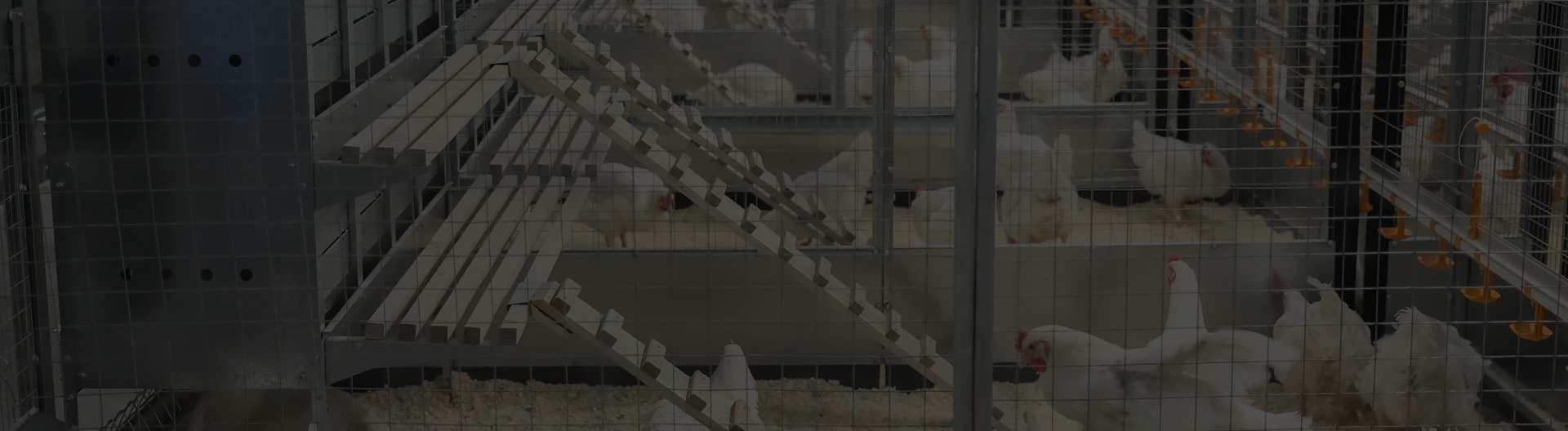
Essential Layer Chicken Cages Components
დეკ . 11, 2025 15:07 სიაში დაბრუნება
Essential Layer Chicken Cages Components
A modern layer chicken cage system is far more than just a collection of metal cages for chickens; it is a sophisticated, integrated infrastructure designed for maximizing egg production efficiency and maintaining high standards of flock health. Understanding the individual components and how they function together is essential for successful poultry farm management.
The Core Structure: Metal Cages for Chickens and Supporting Frames
The physical cage unit and its supporting framework form the skeleton of the entire system, dictating stability, durability, and bird density.
A. Cage Mesh Panels
The cage itself is assembled from multiple specialized panels, all made from heavy-gauge, hot-dip galvanized or highly corrosion-resistant wire:
Bottom Mesh (Floor): Engineered with a specific slope (typically $7^\circ$ to $8^\circ$) to allow the laid eggs to gently roll out onto the collection area. The wire spacing is precise to support the hens' feet comfortably while allowing droppings to pass through easily.
Front Mesh: Features hinged or sliding doors for bird access and is designed to accommodate the feeding trough system.
Back and Side (Partition) Mesh: Provides enclosure and separates the system into individual living compartments, controlling flock size within each unit.
Top Mesh: The roof of the cage, which prevents birds from escaping and provides structural closure.
B. Structural Support Frames
These heavy-duty frames bear the entire load of the cages, birds, feed, and water systems.
Legs and Beams: Constructed from robust, galvanized steel tubes (A-Type) or vertical posts (H-Type). Their stability is paramount, as any misalignment can affect egg roll-out and system integrity.
Connecting Hardware: High-strength bolts, nuts, and specialized hog rings used to assemble the mesh panels and secure them to the main frame, ensuring the structure can withstand years of operation and frequent cleaning.
Automated Chicken Cage System: Feed and Water Systems
The automation of feed and water delivery is a defining feature of modern chicken egg layer cages, minimizing labor, reducing waste, and improving biosecurity.
A. Automated Feeding System
This component ensures every bird receives a consistent and adequate supply of nutrition, reducing competition and stress.
Feed Troughs: Installed along the front of the cages, these are typically V-shaped to maximize capacity while limiting the hens' ability to scratch out and waste feed.
Feed Delivery Mechanism:
Trolley (Hopper) System: A motorized cart that travels the length of the cage row, evenly dispensing feed into the trough below.
Chain/Auger System: A continuous loop or spiral auger moves through a closed tube and dispenses feed into the troughs, ensuring constant availability.
Silos and Conveyors: The system includes outdoor silos for bulk feed storage and automated conveyor belts or augers to transport the feed from the silo into the poultry house's feed distribution system.
B. Closed Nipple Drinking System
This sealed system provides clean water on demand, crucial for biosecurity and water consumption consistency.
PVC Pipes and Drinkers: Heavy-duty PVC water lines are secured to the top or sides of the cages, fitted with stainless steel nipple drinkers that release water only when pecked by the hen.
Water Regulator: A pressure regulator installed at the start of each water line maintains the precise water pressure required for the nipple drinkers, ensuring consistent flow regardless of the line length.
Drip Cups/Catch Trays: Small cups positioned under the nipples (especially in H-Type layer chicken cages) to catch any excess water, preventing it from dripping onto the manure belt or the birds below.
Egg Chicken Cage: Product Collection Systems
The specialized design for egg collection is the centerpiece of the poultry cages for layer chickens, designed to move the delicate product safely from the cage to the packing room.
A. Egg Collection Belts
Material and Placement: Wide, durable fabric or plastic belts run along the front of the cage row, positioned directly beneath the egg roll-out area.
Motors and Drive Units: Each tier and row of cages has a dedicated motor and gear assembly at the end of the line, which gently moves the belt, carrying the eggs toward the cross-collection system.
B. Cross-Collection System
Transfer Mechanism: This system is located at the end of the cage rows and is designed to lift or convey the eggs from the individual belt lines onto one main, central conveyor belt.
Central Conveyor: A larger belt that transports all eggs from the house to the egg handling room, sometimes including features like a buffer or accumulator to prevent congestion.
Waste Management: Hygiene and Environmental Control Of Chicken Cage
Effective manure removal is non-negotiable for flock health and controlling the house environment, especially in high-density metal cages for chickens.
A. Manure Removal Belts (H-Type)
Polypropylene Belts: Strong, smooth belts installed beneath each tier of cages to catch all droppings.
Scraper Mechanism: At the end of the belt run, a series of scrapers ensures that all manure is scraped off and transferred into the cross-conveyor system.
Manure Cross-Conveyor: An auger or belt system outside the cage rows that collects manure from all the belts and transports it out of the poultry house to a storage or processing facility.
B. Cage Separation Plates
In multi-tier systems, galvanized or plastic plates are often positioned between the bottom mesh of one cage tier and the top mesh of the cage tier below it. This is a simple yet crucial design component that prevents the contamination of lower birds from the droppings of the upper tier.
Layer Chicken Cages’ Environmental and Control Components
A complete chicken egg layer cages setup includes the necessary controls to manage the automated functions.
Control Panel: A central electrical unit that manages the timing and operation of all automated systems (feeding, manure removal, egg collection, and ventilation). It allows for programming different feeding times and operational cycles.
Ventilation and Cooling Systems: While not structurally part of the cage itself, these components are essential for a controlled-environment house and must be integrated with the cage layout. This includes:
Fans: Exhaust fans positioned to draw air out of the house.
Cooling Pads: Evaporative cooling pads installed at the opposite end of the fans to draw cooled air into the house.
By integrating these five component groups, layer chicken cages transform into an efficient, industrial-scale system that optimizes output while maintaining high standards for the birds housed in these complex metal cages for chickens.
-
Professional Mini Poultry Cage for Efficient Small Scale Farming
სიახლეებიApr.16,2026
-
Optimizing Poultry Production with Advanced Cage System Poultry
სიახლეებიApr.09,2026
-
Optimizing Layer Poultry Cages for Efficient and Profitable Egg Production
სიახლეებიApr.07,2026
-
Comprehensive Guide to Poultry Cages for Layers and Modern Farming Solutions
სიახლეებიApr.04,2026
-
Comprehensive Guide to Optimizing Poultry Laying Cages for Egg Production
სიახლეებიMar.31,2026
-
Maximize Egg Production with Efficient Poultry Layer Cage Systems
სიახლეებიMar.28,2026





 English
 Afrikaans
 Albanian
 Amharic
 Arabic
 Armenian
 Azerbaijani
 Basque
 Belarusian
 Bengali
 Bosnian
 Bulgarian
 Catalan
 Cebuano
 Corsican
 Croatian
 Czech
Czech
 Danish
 Dutch
Dutch
 Esperanto
 Estonian
 Finnish
 French
 Frisian
 Galician
 German
 Greek
Greek
 Gujarati
 Haitian Creole
 Hausa
Hausa
 Hawaiian
 Hebrew
 Hindi
Hindi
 Miao
Miao
 Hungarian
 Icelandic
 Igbo
Igbo
 Indonesian
 Irish
Irish
 Italian
 Japanese
 Javanese
 Kannada
 Kazakh
 Khmer
Khmer
 Rwandese
 Korean
 Kurdish
 Kyrgyz
 Lao
Lao
 Latin
Latin
 Latvian
 Lithuanian
 Luxembourgish
 Macedonian
 Malgashi
 Malay
Malay
 Malayalam
 Maltese
 Maori
Maori
 Marathi
 Mongolian
 Myanmar
 Nepali
 Norwegian
 Norwegian
 Occitan
 Pashto
 Persian
 Polish
 Portuguese
 Punjabi
 Romanian
 Russian
 Samoan
 Scottish Gaelic
 Serbian
 Sesotho
 Shona
Shona
 Sindhi
 Sinhala
 Slovak
 Slovenian
 Somali
 Spanish
 Sundanese
 Swahili
 Swedish
 Tagalog
 Tajik
Tajik
 Tamil
Tamil
 Tatar
Tatar
 Telugu
 Thai
Thai
 Turkish
 Turkmen
 Ukrainian
 Urdu
Urdu
 Uighur
 Uzbek
Uzbek
 Vietnamese
 Welsh
Welsh
 Bantu
Bantu
 Yiddish
 Yoruba
 Georgian